Skin aging and methods of its correction: cosmetology for permanent makeup masters
Medical aspect in permanent makeup
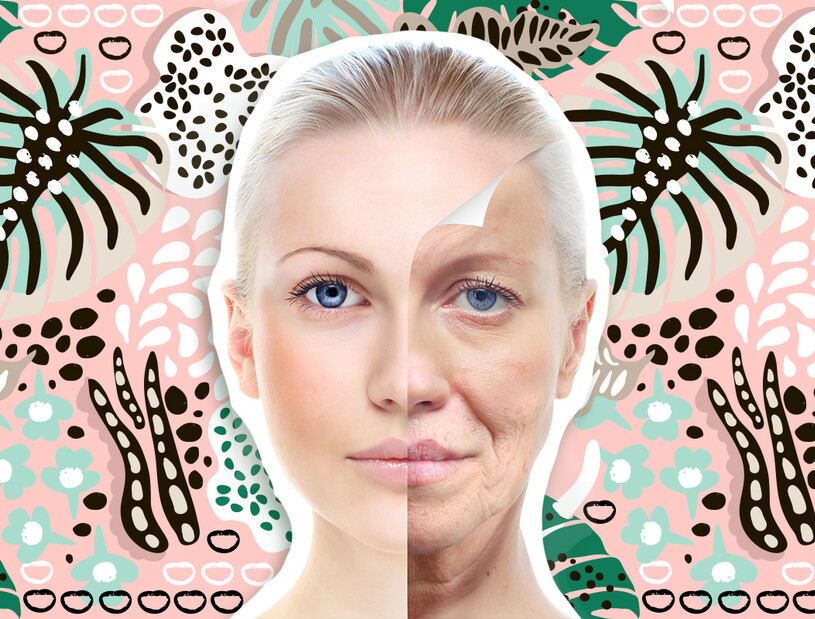
Permanent makeup is often referred to as a cosmetic procedure. Therefore, the permanent master is simply obliged to understand the basics of cosmetology. And we will help you with this!
Human skin is subject to the influence of many factors, which can be conditionally divided into internal and external. Therefore, in cosmetology, it is customary to distinguish two types of aging: chronoaging and photoaging.
With chronoaging (biological, age-related), the following processes predominate in the skin:
- slowdown in regeneration;
- reduction in the thickness of the epidermis;
- flattening of the border between the dermis and epidermis;
- decrease in the amount of collagen (by 1% annually), elastin and ground substance (due to a decrease in the number of fibroblasts);
- reduction in the number of blood vessels.
Photoaging (associated with exposure to environmental factors, especially UV radiation) manifests itself on the skin in the form of:
- hyperkeratosis;
- age spots (solar lentigo);
- elastosis (thickening of the dermis due to increased synthesis of altered elastic fibers);
- decrease in the amount of collagen in the dermis;
- decrease in immunological protection.
Depending on age, type of skin aging, constitutional features, the following visual changes appear:
- omission of tissues (ptosis);
- sagging, wrinkling;
- deepening of the nasolabial fold, wrinkles in the corners of the mouth;
- the appearance and deepening of facial wrinkles (forehead, bridge of the nose, "crow's feet");
- violation of the oval of the face, the appearance of a second chin;
- the appearance of age spots;
- sharpening of facial features;
- dark circles and puffiness under the eyes.
As a result of these processes, procedures are needed that promote rejuvenation, slow down skin aging by stimulating collagen production and improving microcirculation.
Mesotherapy, mesoporation, meso what?
Mesotherapy is the intradermal administration of the active components of drugs and fortified complexes, the so-called cocktails. The composition of the cocktail is selected based on the indications for the procedure. The drug can be injected locally, into the area requiring corrections, and by “chopping” the area around (remote mesotherapy).
Mesotherapy, at first glance, is a familiar and understandable procedure. But today we have access to such methods as non-injection mesotherapy (mesotherapy) and mesotherapy with rollers. Are these procedures mesotherapy? For whom are they applicable and what is their main essence? We will seek answers to these and other questions.
Mesotherapy can be injection (that is, useful substances are delivered to the skin with the help of injections with ultra-thin needles) and non-injection (hardware).
Injection mesotherapy (varieties - biorevitalization and mesolifting) is the most radical procedure that can affect both a specific area and the entire body as a whole. Only a specialist with medical education has the right to carry out the procedure.
There may be slight bruising and swelling after the procedure. But it is needle mesotherapy that penetrates deep into the skin, so it works most actively and efficiently. True, our cells are arranged in such a way that they will not take too much, so everything that is superfluous is simply removed.
Non-injection mesotherapy (synonyms - hardware mesotherapy, mesoporation, electroporation, aquaporation) is a procedure during which drugs are injected under the skin not with a needle, but with a high-pressure apparatus that directs a stream of oxygen to the skin. In this case, that part of the treatment results that is associated with the best traditions of oriental medicine in acupuncture and reflexology is lost.
Non-injection mesotherapy is offered as a replacement for the traditional one. The main advantages are called: instant effect and no pain. But the result of such a procedure is not long-term, non-injection mesotherapy requires a long course. A number of cosmetologists even recommend combining traditional mesotherapy with non-injection mesotherapy. Nevertheless, the method of non-injection therapy is successfully used today for skin rejuvenation, getting rid of age spots, wrinkles and other skin problems.
Microneedling
Microneedling, also called dermal needling (or rolling), is a technique that consists in stimulating the upper layers of the dermis with microneedles, with or without mesotherapy solutions. The procedure is performed using a mesoscooter, a sterile medical device consisting of a cylindrical head with 360–540 finest needles and an ergonomic handle. Fine needles create many microscopic channels in the skin.
The mesoscooter has been used in cosmetology practice not so long ago, but it cannot be said that this is a new device. In Chinese traditional medicine, the reflex mechanical effect of such devices has been used for a long time. It consists in superficial multiple acupuncture of certain zones and biologically active points (reflex reaction) and micromassage of the skin and underlying tissues. A local reaction is expressed in a change in the blood supply to the skin area, temperature, and sensitivity.
The mesoscooter is recovery from damage. Only a specialist with a medical education has the right to carry out the procedure (with the exception of rollers for home use with a needle up to 0.5 mm). The main function of the mesoscooter is microdamage to the skin. As a result, the skin begins an active recovery process, stimulating the production of collagen and elastin. The secondary effect of the mesoscooter is aimed at the penetration of the cocktail into the skin.
The mesoscooter leaves almost no marks and is not as painful as needle mesotherapy. Thanks to this, it can be used on sensitive areas of the skin (décolleté, eye area). To achieve results, it is necessary to undergo a course of procedures with a mesoscooter. Depending on the selected cocktails, age wrinkles are leveled, hyperpigmentation is reduced, stretch marks and scars are reduced. That is, the impact of the mesoscooter has a pathogenetic effect on the aging process or on those structural changes that occur in the skin with age.
PS We asked cosmetologists for a long time about the exact definition of mesotherapy. As a result, we will focus on the fact that mesotherapy can only be needle (or using a mesoinjector). Mezoroll and hardware mesotherapy are more gentle methods that cannot be called mesotherapy. They work on the top layers of the skin and will never penetrate as deep as a needle. All of these variations are applicable to problems of their own spectrum.
Read also:
Skin rejuvenation: cosmetology for permanent makeup artists
Read also
- Oily skin and permanent makeup: acceptable techniques
- Work on oily skin: factors affecting the quality of permanent makeup
- The nuances of dermopigmentation, or what a permanent makeup master needs to remember
- Dermatology for PM Artists: Tattoo-Associated Reactions
- Possibilities of permanent makeup: camouflage
- We hide aesthetic defects of the skin: features of pigments for camouflage
- Infection safety for permanent makeup artists
- Areola repigmentation: aesthetics with permanent makeup
- Invasive procedure