Removers vs Lasers: Advantages of Removers (Part II)
Only for trained professionals

The fact of receiving low-quality PM or microblading is an unpleasant episode. Its removal is a process. Can permanent makeup or microblading be removed? Definitely yes!
Inga Babitskaya, certified specialist in the field of permanent make-up, make-up, stylistics, cosmetology and aesthetics, international class master teacher, speaker of Russian and international congresses, conferences and assemblies dedicated to permanent make-up and microblading, member of the panel of judges and competitive juries for PM and microblading, author of the book - tutorial "Permanent makeup - harmony should be in everything!" (Moscow)
Continuation. Start here
Removers vs lasers
Unfortunately, despite the high manufacturability, the laser has a lot of limitations.
Firstly, there are much more contraindications for laser removal than for removal with a remover.
Secondly, the laser "does not see" certain colors (white, shades of beige, yellow, orange, yellow-green, some reds, etc.).
Thirdly, even with a successful process of removing a contrasting pigment from a well-removable color spectrum, when a certain result is achieved, when the pigment becomes low-contrast to the surrounding tissue, the removal efficiency of this residual, but still well visually determined color, sharply decreases, and sometimes becomes zero.
Fourthly, the laser can lead to color inversion; Compounds such as titanium dioxide and iron oxide can turn gray to bright green when exposed to laser light.
Therefore, if the task is to remove a low-contrast hue that is not included in the “visibility zone” of the laser, a color inverted after the laser, it is definitely preferable to use a remover .
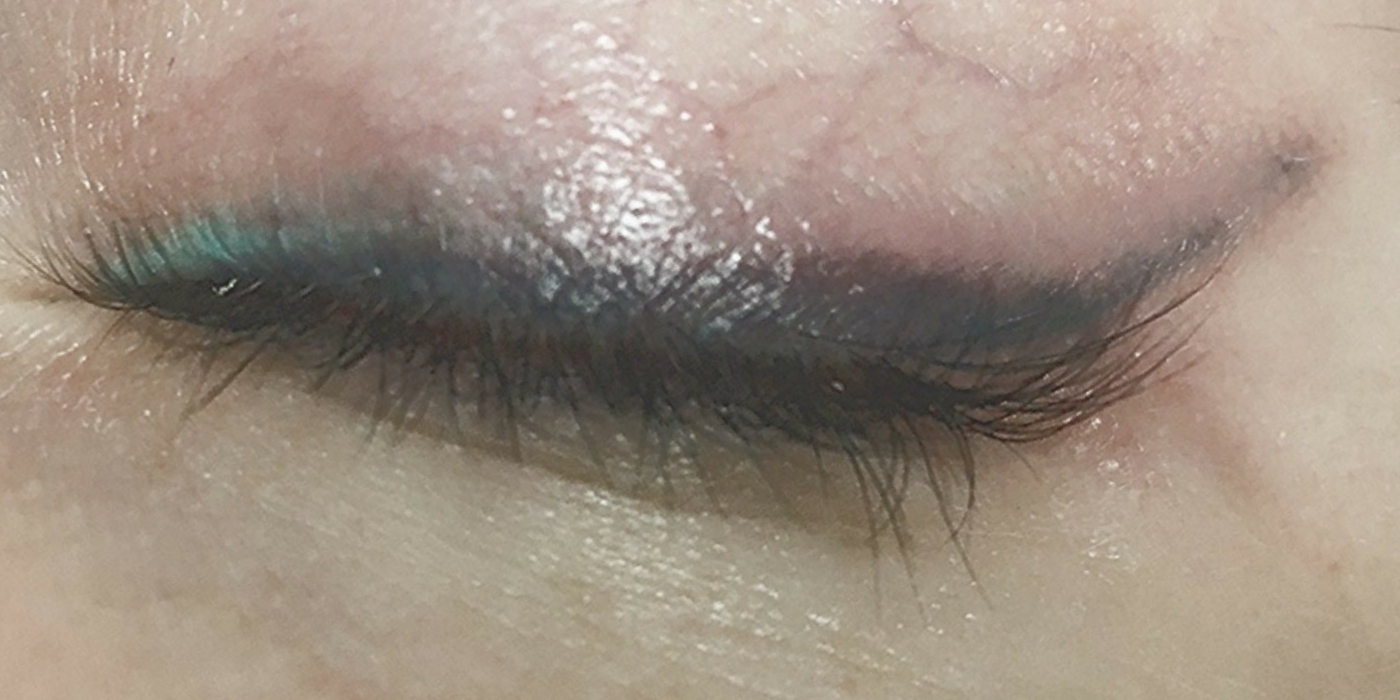

Before and after the removal procedure with a remover. Photos provided by the author
At the current stage of the development of the beauty industry in the field of permanent makeup, there is only one method for removing pigment of any color and shade, pigment with any constituents, pigment with any particle size, removing tattoos made by a handicraft method - a gel pen, burnt rubber, Rottring mascara and etc., is the removal of pigment from the skin using an oxide remover.
Benefits of pigment removal with removers
The removal of pigments from the skin after permanent makeup and microblading procedures is a procedure that is fundamentally different from the laser method. It is based on unique biochemical processes aimed at extracting the coloring pigment from tissues, and not crushing it (as with laser removal).
For example, a feature of oxide removers is that their formulas contain both derivatives of metal oxides and their transition states in sizes corresponding to coloring pigments. In addition to the similarity in physical properties, there is a similarity in chemical composition, which implies the affinity of the elements, their good miscibility. During the physical contact of the remover with the pigment in the skin, their components are mixed. The components of oxide removers are not able to stabilize in the skin (like pigments) and are rejected from the tissues, simultaneously removing the pigment.
Laser removal affects the change in skin density and the physico-chemical properties of coloring pigments, which has its effect on the removal efficiency of the remover. This effect is practically unpredictable and can be a factor both accelerating and slowing down the process of pigment removal from the skin.
The duration of the presence of pigments after permanent makeup and microblading does not have a noticeable effect on the removal efficiency.
The unique properties of oxide removers allow you to remove the pigment even immediately after its introduction! That is, the master who made a mistake has the opportunity to correct it immediately thanks to the use of a remover!
Professional use of removers is allowed only by specialists who have undergone professional training. And without special training, it can lead to fatal consequences - up to necrosis.
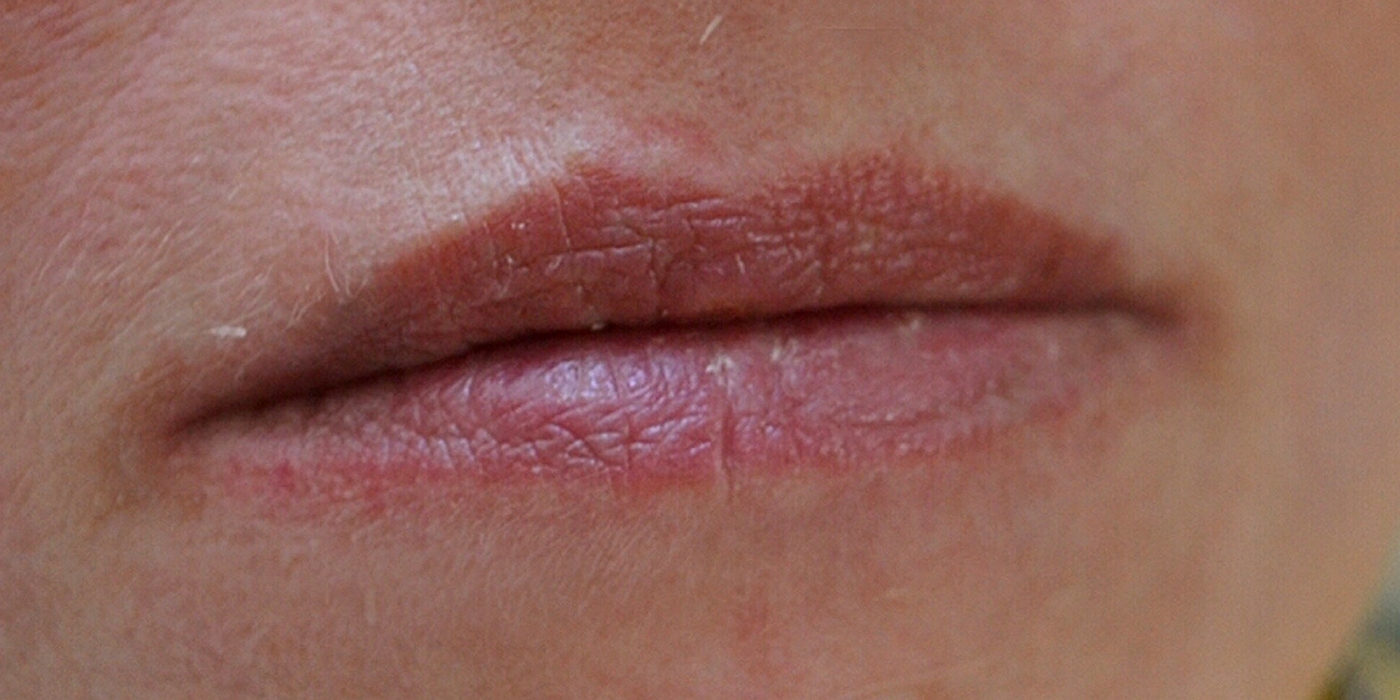

Before and after the removal procedure with a remover
Microblading: even harder
Many specialists working with permanent make-up removal have faced an unexpected problem today: the pigment introduced into the skin during the microblading procedure is extremely difficult to remove, and in some cases is not removed at all by laser.
I don’t see anything surprising in this, because in every second case of poorly performed microblading, the pigment is stabilized in the scar tissue. And, of course, removing the pigment from the scar is not an easy task. In half the cases, the laser is powerless.
How does the remover behave in such cases?
With the help of a remover, the pigment introduced through a puncture and stabilized in the form of a suspension in the skin is perfectly removed. But, introduced through the incision and stabilized in the form of a tape, and even located at an angle, the pigment is removed much more slowly.
The percentage of successfully removed permanent makeup during a professional removal procedure with an oxide remover is 99%. But the location of the coloring pigments after permanent makeup and microblading is different, the process of removing the consequences in the second case is a more serious burden on the skin than with permanent makeup, and the successful percentage is less - about 60%.
Working with a remover is a complex and very responsible manipulation that requires special training. Working as a remover to remove the consequences of low-quality microblading is more difficult and doubly responsible.
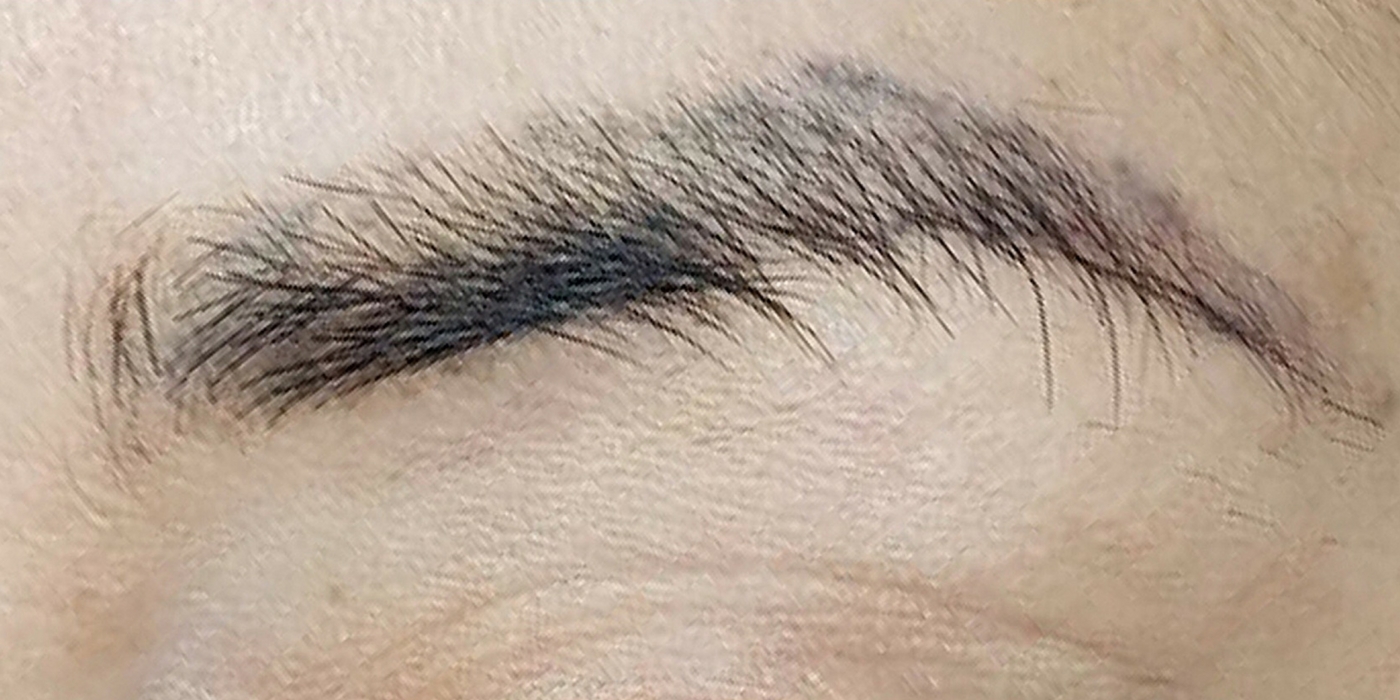
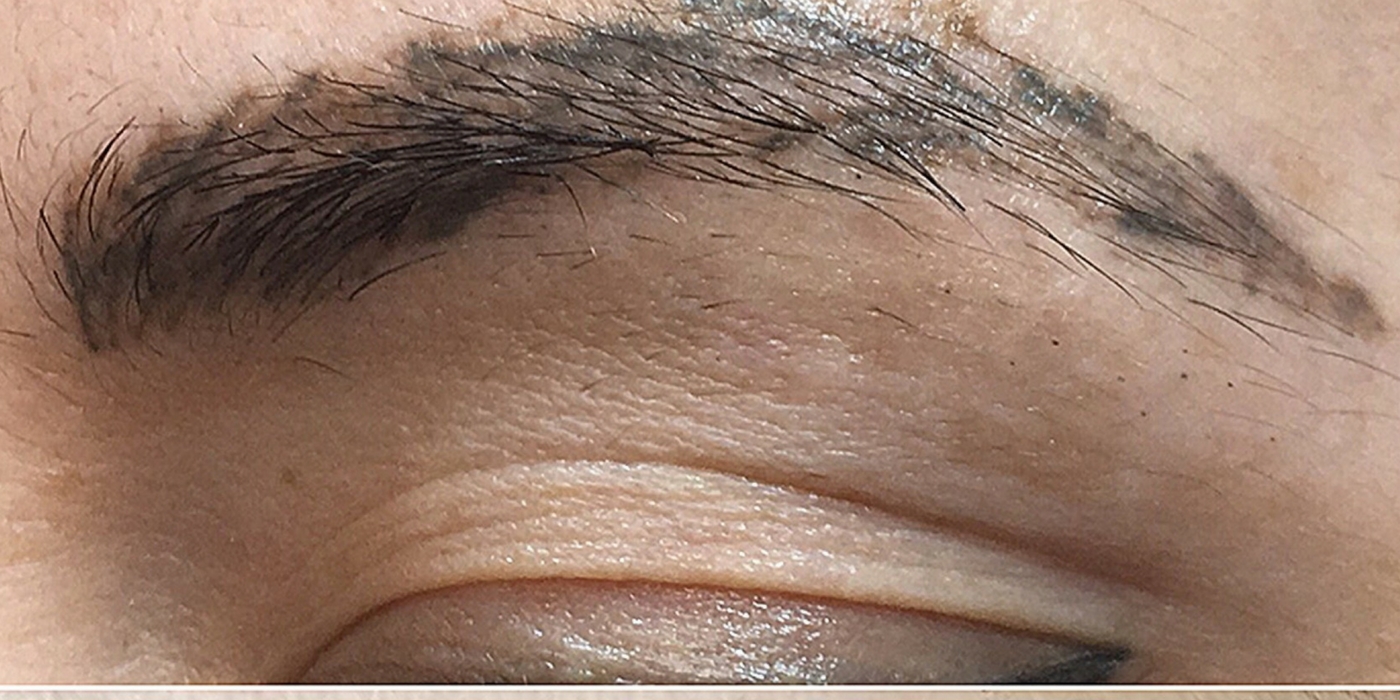
Before and after the removal procedure with a remover
Often masters demonstrate excessive courage and confidence when removing both permanent makeup and microblading. It is worth recalling that it is very dangerous to use a remover without special protector substances in the eye area. The substances that make up the remover can damage the cornea of the eye. Therefore, if it is impossible to implement special precautions, the risk is unjustified. I mean, for example, the removal of pigment from the area between the eyelashes, from the mucous membrane of the upper and lower eyelids, from the area of the inner corner of the eye.
So far, there is only one remover in the world - IQ PigmentRemover, which is available in two compositions: for use on the skin of the body and face, with the exception of the eye area, and for use in the eye area.
If this remover is used by a professional, taking into account all the methodological rules, and the client follows the recommendations for caring for the removal area, then the procedure for removing pigment from the periorbital area is safe.
Occasionally, the pigment lies extremely deep - even at the level of subcutaneous fat. In this case, its chemical removal with a remover without known harm to the skin (formation of scar tissue), unfortunately, is impossible.
There are many more permanent makeup and microblading procedures performed in Russia than in other countries. Therefore, we remove it more often too. I can state with full responsibility that the Russian specialists have a very rich experience in removal. For example, procedures for the removal of pigments in the work of masters of the school-studio today occupy more than 60% in percentage terms with permanent make-up. We also constantly perform procedures that are exotic for other countries, such as the removal of permanent blush, camouflage of dark circles under the eyes, and, more recently, unsuccessful trichopigmentation.
Unfortunately, none of the existing methods of removing permanent makeup and microblading can be considered 100% safe, each of them has its own advantages and disadvantages.
Read also
- Permanent makeup as a business: master training and equipment selection
- Microblading correction: how to fix eyebrow tattoo
- Permanent Makeup Removal: When is a laser preferred?
- It cannot be corrected: when does permanent makeup need to be removed?
- 7 reasons, or Why lasers for PM removal break down?
- 5 mistakes of a beginner tattoo artist
- Not from a “blank slate”: eyebrow tattoo correction
- Be like PERMANENT STYLE UKRAINE! Insights from Natalie Masnoy