Asymmetry correction: the "golden section rule" and permanent makeup
Correction of the asymmetry of the lips and eyebrows with the help of aesthetic tattooing
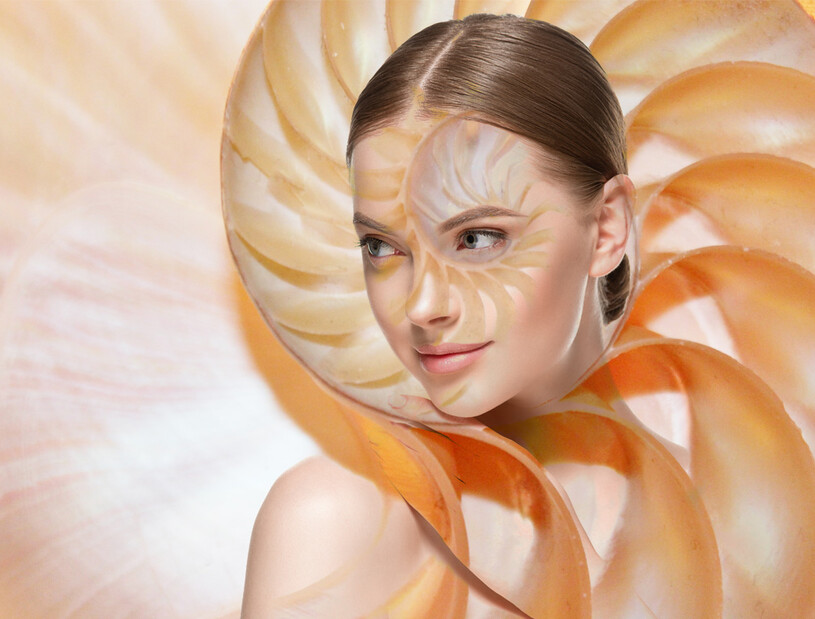
Facial asymmetry - a cute feature that gives charm or a reason for constant frustration? Let's talk about one of the simplest and safest methods for correcting asymmetry with the help of aesthetic tattooing.
Facial asymmetry is present to some extent in every person. But for some, asymmetrical features are just a cute feature that gives charm, while for others it is a reason for constant frustration, causing a desire to go under the surgeon's knife. Fortunately, today there are less radical methods for correcting such shortcomings. One of the simplest and safest is the correction of the asymmetry of the lips and eyebrows with the help of aesthetic tattooing.
Advantages of the method
Tattoo allows you to:
- correct natural imperfections;
- make less noticeable not only asymmetry, but also scars or scars;
- reduce the severity of age-related changes.
There are quite a few permanent options. However, if you need to remove asymmetry, you should not choose a technique with an effect that imitates decorative makeup - bright accents will draw even more attention to the problem and intensify it. In this case, it is better to stop at a natural tattoo of the lips or eyebrows, which will gently eliminate the imbalance, making facial features more proportional and attractive.
Symmetry and permanent makeup: expert opinion
What do we know about asymmetry?
The fact of asymmetry in the external structure of the face and body of a person was known even to the ancient artists and sculptors of the ancient world and was used by them to give expressiveness and spirituality to their works. Advocates of asymmetry believed that it enlivens the face, gives it great charm, expressiveness, originality and beauty. The asymmetry of the face of the statue of Venus de Milo, created by the ancient Greek sculptor, is expressed by the displacement of the nose to the right from the midline, the high position of the left auricle and left eye socket, and a smaller distance from the midline of the left eye socket than the right one. Meanwhile, supporters of symmetry criticized the asymmetry of the forms of this generally recognized standard of female beauty. The left half of her face is slightly elongated in the vertical axis and has softer, smoother outlines.
Evidence for the asymmetry of a normal human face is the method of creating an image of the same face from two left and two right halves. In this way, two additional portraits are created with absolute symmetry, but significantly different from the original. A person as a living organism is characterized by bilateral symmetry of the right and left sides of the body. At the same time, this symmetry is not ideal, a striking example is the dominance of the functions of the right hand in right-handers and the left hand in left-handers, some difference in the size of the feet. But if minor differences in the limbs are perceived as the norm, then facial asymmetry often becomes a source of serious psychological discomfort.
Absolutely symmetrical faces do not exist, and a slight difference in proportions between the right and left halves of it is subconsciously perceived by us as harmony. In scientific circles, there are more than 25 reasons why the right and left sides of the face are not exactly identical. Roughly speaking, any asymmetry of the face can be either congenital, due to structural features of the bones of the skull, or acquired. Congenital pathologies are explained by heredity and malformations of intrauterine development of the fetus. Subsequently, muscle fibers can make them completely invisible, and sometimes, on the contrary, emphasize imperfections.
What does facial asymmetry tell psychologists? About how big the difference is between your actions, lifestyle and the sphere of your emotions, about the level of inner harmony of a person. After all, the right side of the face reflects the work of the left hemisphere of the brain, which is responsible for logic, thinking, and the practical side of life. The left side is a projection of feelings and experiences, and they are under the control of the right hemisphere. Thus, a portrait from the right halves is called "life", and from the left "spiritual".
Acquired asymmetry and pathological changes
The causes of acquired facial asymmetry are varied. Most often, these are injuries and past diseases, such as:
- clamps of nerve endings (for example, after a stroke), inflammation of the facial nerve;
- visual impairment (strabismus, a large difference in visual acuity between the right and left eyes);
- diseases of the teeth (malocclusion, absence of teeth on one side of the jaw, forced chewing on one side);
- torticollis, congenital or acquired in childhood.
Our habits, mimic and physiological, also play a significant role. If you constantly squint one eye, chew gum with one side of the jaw, sleep only on a certain side, sooner or later it will be reflected on the face.
Not every manifestation of facial disproportion requires medical intervention. If the cause of facial asymmetry lies in weak muscle tone, facial gymnastics and massage with an emphasis on certain facial muscles help well. A well-chosen hairstyle perfectly hides minor flaws. For women, permanent makeup is a powerful weapon in the fight against their own imperfection.
With serious pathological changes, medicine comes to the rescue. How to correct the asymmetry of the face in each specific case, the consultation of a specialist will tell you: a neuropathologist, an ophthalmologist, a dentist, a maxillofacial surgeon, an orthodontist. The main task is to find out the cause, and then the treatment of facial asymmetry will consist in its elimination, and if this is not possible, the correction of the consequences. Permanent makeup in this sense is not the last resort, but its possibilities are truly enormous.
What is the ideal face?
The first thing a person pays attention to is the volume and shape of all surrounding objects. The form, which is based on a combination of symmetry and the "golden section", creates a feeling of harmony and beauty in a person.
The "rule of the golden section" is a harmonious proportion, in which the whole always consists of two main parts, which are in a certain ratio to each other relative to the whole.
The "golden section" is a section of a segment into two parts in such a way that the length of the larger part is related to the length of the smaller part in the same way as the length of the entire segment is to the length of the larger part, and can be calculated by a factor of 1.62 or 100% \u003d 38% + 62%.
The principle of the "golden section" is revealed as a universal canon of structural and functional perfection of the whole and its parts in many areas, and first of all in nature, art, architecture and even in mathematics.
The “golden section rule” is also applicable in permanent makeup for face correction and helps to visually bring it closer to more harmonious proportions and shape. Thus, it is possible to adjust the oval of the face, the size and shape of the eyes, nose and eyebrows.
The harmonious distance between the eyes, equal to the length of the section of the eyes, can be corrected using visual techniques.
The main method of visual correction in makeup is based on the principle of light and dark tones. Dark and cold colors reduce the volume, distance and emphasize the form, while light and warm colors increase the volume, bring them closer and apart, blurring the boundaries.
Read also
- Symmetry and permanent makeup: how to preserve the individuality of the client
- PM of the periorbital region: advice from Anna Zabolotnaya
- Correction of the periorbital zone with the help of PM: expert advice
- Permanent makeup in Ukraine: how to choose equipment
- Alopecia Correction: Trichology Basics for Permanent Makers
- Tattoo and permanent makeup removal: an overview of methods
- Camouflage in PM: we solve cosmetic problems of the skin
- Features of working with dark skin: a note to the PM master
- Age-related changes: the physiological rationale for skin aging