Peptides: fashionable or effective component in cosmetics?
Peptide cosmetics are becoming increasingly popular today. The term “peptide” appeared, like the ingredient, not yesterday. But, apparently, the time has come for him to become “fashionable”. Let's understand the effectiveness of peptide therapy.
Skin aging and its pathological age-related changes are associated with the aging of the entire organism as a whole. At the same time, the most pronounced and consistent histological changes are observed in the epidermis, smoothing of the dermoepidermal transition with erasure of both dermal papillae and epidermal outgrowths. In women between 30 and 90 years old, the number of outgrowths decreases by more than 50%, which affects the trophism of the skin. It has been established that at the age of 30-80 years, the level of epidermal metabolism decreases by approximately 30-50%, and the rate of linear growth of hair and nails also decreases.
Tangible and fundamental changes also occur in the dermis. In older people, the thickness of the dermis decreases by about 20%, although in sun-protected areas of the skin, significant thinning does not occur until after age 80. At the same time, the cellular composition of the dermis is significantly reduced, and blood vessels disappear. Every decade of life in both men and women, the elasticity and extensibility of the skin decreases by approximately 25%. With biological aging, the dermis gradually becomes thinner due to a decrease in the volume of the main substance, collagen and elastin fibers. The main age-related change in connective tissue is a decrease in water and the “ground substance - fiber” ratio. A decrease in this ratio is associated with a decrease in the concentration of glycosaminoglycans (GAGs). It is known that the first age-related changes are associated with a decrease in the content of hyaluronic acid. Age-related significant changes in GAGs are recorded after 35-40 years and reach their maximum during menopause. The described changes determine the pathogenetic basis for the correction of age-related changes.
What can cosmetics with peptide complexes give our skin?
Peptides support the activity of cellular systems at a high level. This means that the skin is better protected, the cells are more resistant to lack of oxygen, the effects of toxic substances and other destructive agents. Thanks to the effects of peptides, existing wrinkles can be reduced, the skin will be tightened, moisturized, actively resist numerous aging factors, and complexion will improve. Peptides also help strengthen facial contours, increase overall skin tone, and strengthen collagen fibers. The constant use of peptides helps to normalize regenerative processes in organs and tissues. Peptides affect the functional activity of tissues both under standard and critical conditions. This means that in any, even the most aggressive conditions in which the human body finds itself, the action of peptides maintains the number of mature, active cells at the proper level, and also regulates their metabolism. This mechanism underlies the effective interaction of all organs, and largely thanks to it, our body can act harmoniously as a single whole, adequately respond to the changing conditions of the surrounding world and adapt to them.
Peptides play an important role in restoring normal cell functioning and have high antioxidant activity, so when exposed to them, the skin rejuvenates and overall aging slows down. Peptides affect the production of genes responsible for cell reproduction, and this is directly related to skin renewal. Peptides act as information carriers at the cellular level: they transmit appropriate signals to cells, triggering self-healing processes, and are also transporters of active substances from cosmetic preparations into cells. The active ingredients of cosmetics penetrate the epidermis with difficulty and in very small quantities if they are not helped, so cosmetics devoid of conductive substances can have only minimal external effects on the skin. Peptide molecules are so small that they penetrate into the deepest layers of the skin and stimulate the production of all active substances in the right quantities in full accordance with your biological rhythms and individual skin characteristics. Peptides restore impaired microcirculation in various layers of the skin and normalize the condition of the walls of blood vessels. This, in turn, leads to improved blood supply and normalization of skin cell nutrition, which is manifested in improved complexion, reduction of spider veins and spider veins.
RENAISSANCE is an Italian company that promotes an exclusive range of innovative, active and high-quality products, guaranteeing excellent results thanks to a competent and productive combination of peptides and herbal ingredients. The heart of the development is OMEGA-CTP - a complex - an encapsulated peptide, which, by enhancing the signal from the cell membrane, promotes the growth of the potential of skin cells. The process of positive transformation of skin structures is regulated by the presence of effective antioxidants.
A modern understanding of complex aesthetic correction is impossible without including in the correction algorithm procedures that improve the “quality” parameters of the skin.
The more effective the procedures, the more natural and long-term the results of injection and hardware correction methods will be. Both patients and specialists are constantly waiting for innovation - an effective, safe way to level out age-related changes. Unfortunately, the long-awaited miracle sometimes pushes the safety of the product into the background. Over the past few years, several brands have appeared with growth factors and certain peptide complexes, which, although positioned differently on the market, are actually produced at the same plant using almost the same recipe.
So, what is better: hyaluronic acid or DNA, vitamins or peptides, growth factors or strange plant extracts? The list goes on. The incompletely studied effects of the complex use of peptides can conceal many potentially dangerous traps, because each combination will have unique properties and carry a unique information load peculiar only to it.
Preparations based on hyaluronic acid of non-animal origin. Research has long been conducted, clinically proven, that hyaluronic acid in combination with other components (vitamins, minerals, amino acids, antioxidants, peptides, growth factors) gives more tangible results than a single product. A lot has been said about the results of using HA, so we will not dwell on this in detail. It’s better to consider the components that potentiate the action of hyaluronic acid and affect the pathogenesis of aging.
Growth factors are natural compounds that can stimulate the growth, proliferation and/or differentiation of living cells. As a rule, these are peptide or steroid hormones. Growth factors function as signaling molecules for interactions between cells. Examples are cytokines and hormones that bind to specific cell receptors. Italian neuroscientist Rita Levi-Montalcini shared the Nobel Prize in Physiology or Medicine in 1986 for the discovery of growth factors, particularly nerve growth factors. Other well-known growth factors are erythropoietin and insulin-like growth factor 1.
Vitamins (from the Latin vita - “life”) are a group of low-molecular organic compounds of relatively simple structure and diverse chemical nature. Vitamins perform a catalytic function as part of the active centers of various enzymes, and can also participate in humoral regulation as exogenous prohormones and hormones. Despite the exceptional importance of vitamins in metabolism, they are neither a source of energy for the body (they have no calorie content) nor structural components of tissues. Most vitamins are not synthesized in the human body, so they must be regularly and in sufficient quantities supplied to the body through food or in the form of vitamin-mineral complexes and nutritional supplements.
Peptides are molecules consisting of two or more amino acids connected by a peptide bond. Peptides, which have a sequence of approximately 10-20 amino acid residues, may also be called oligopeptides. With longer sequence lengths they are called polypeptides. Proteins are usually called polypeptides containing approximately 50 amino acid residues. Peptides can be obtained from plants, animals, or artificially synthesized.
Peptide hormones and neuropeptides, for example, regulate most processes in the human body, including taking part in cell regeneration processes. Peptides of immunological action protect the body from toxins that have entered it. For the proper functioning of cells and tissues, an adequate amount of peptides is necessary, however, with age and pathologies, a deficiency of peptides occurs, which significantly accelerates tissue wear, which leads to aging of the entire organism. Today, they have learned to solve the problem of peptide deficiency in the body: the cells’ peptide pool is replenished with short peptides synthesized in the laboratory.
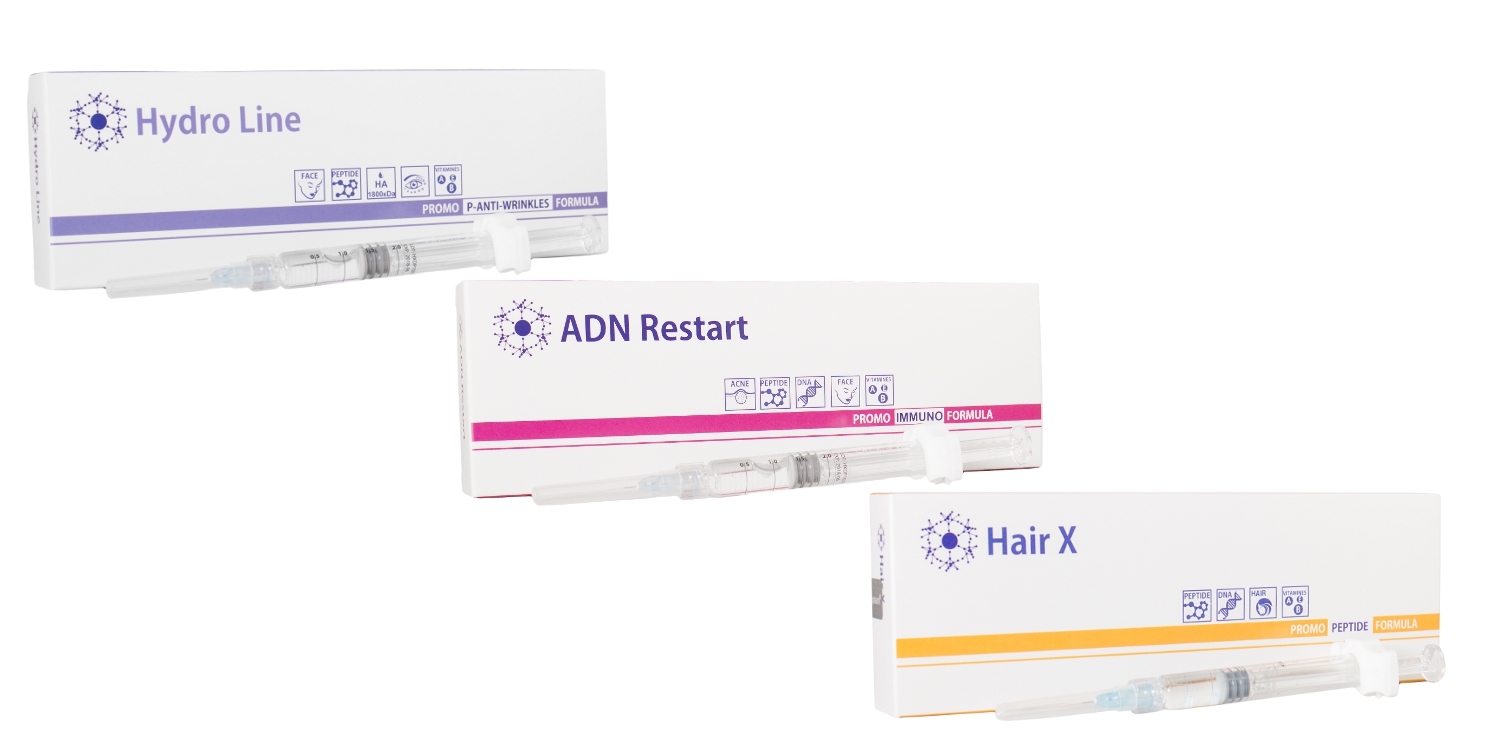
Mesopharm has developed a line of peptide complexes MesoPeptide , which embodies the idea of combining biomimetic peptides, matrikine peptides and classical ingredients such as hyaluronic acid, vitamins and amino acids. The line includes a moisturizing revitalizant and a revitalizant with a botulinum-like effect, complexes for the treatment of diffuse and androgenetic alopecia, a complex of peptides and PDRN for the treatment of acute manifestations of acne and correction of post-acne phenomena, as well as a peptide biorevitalizant with a pronounced lifting and anti-aging effect.
Compliance with conditions
A significant advantage of using a class of synthesized peptides as active cosmetic ingredients is their relative stability in the composition of emulsions and gels, the ability to regulate penetration into the skin and the fairly rapid achievement of working concentrations of the active ingredient. However, it must be remembered that in order to get the maximum effect from the use of a drug containing synthesized peptides as part of a professional correction procedure, it is necessary to satisfy a number of conditions, which can be reduced to five main points:
• specific cleansing with changing the barrier properties of the skin;
• keratolytic exfoliation;
• activation of skin microcirculation;
• creating conditions for active occlusion;
• maintaining the concentration of the ingredient throughout the entire correction period using the method of topical applications at regular intervals.
New biotech ingredients appear in formulations almost daily. Compositions of peptides with glycosaminoglycans, complexes of synergistic peptides, and preparations based on herbal ingredients combined with new peptides are also of interest. This is not a complete list of ingredients that a cosmetologist may encounter in preparations (Table 2).
| Amino acid sequence. | Commercial name | Properties | Peptide type | |
| VSVAPG | Palmitoyl oligopeptide | Stimulation of dermal fibroblast production, reduction of elastin expression, chemotaxis to fibroblasts | signal | |
| YYRADDA | Palmitoyl oligopeptide | Inhibits collagen breakdown through inhibition of procollagen-C proteinase | signal | |
| KTTKS | Matrixyl | Enhances the production of structural proteins, in particular collagen types I and III, fibronectin by stimulating the feedback mechanism of the neocollagenesis mechanism | signal | |
| GHK | Biopeptide-CL | Stimulation of collagen and glycosaminoglycan synthesis | signal | |
| KFK | Lipospondin | Increased production of TIMP-1 and decreased synthesis of MMP-1 through activation of latent TGF growth factor and inhibition of metalloproteinase activity | signal | |
| KVK | Syn-Coll | Enhancement of collagen production through activation of TGF beta factor | signal | |
| VGVVAPG | Biopeptide EL | Similar effect to SYN-Coll | signal | |
| FVAPFP | Peptamide-6 | The mechanism of action is completely unknown, increases resistance to stressors | signal | |
| Not published | Melitane | Alpha-melanocyte-stimulating hormone agonist. Regulates melanin synthesis through activation of MC1-R receptors, reduces the intensity of inflammation, including photo-induced reactions | signal | |
| Not published | Thymulen-4 | Biomimetic, derivative of thymopoietin. Compensates for the natural loss of thymic factors associated with age-related degradation of the thymus. Enhances the regeneration of epidermal structures | signal | |
| Not published | ChroNoLine | Biomimetic isolated from growth factor. Enhances the synthesis of collagen-7, laminin-5 and fibronectin | signal | |
| GHK | CHK-Cu | Increases the level of TIMP metalloproteinase inhibitors and promotes dermal remodeling, stimulates the synthesis of collagen 1, glycosaminoglycans, cytochrome C oxidase and tyrosinase | barrier | |
| GQMQRR | Argireline |
| Neurotransmitter modulatory | |
| Not published | Octapeptides SNAP7 and/or SNAP8 | Competitive inhibition of SNAP-25 | Neurotransmitter modulatory | |
| Not published | Vialox | Competitive inhibition of ACh receptors of postsynaptic membranes | Neurotransmitter modulatory | |
| Not published | Leuphasyl | Presumably modulates enkephalin-like effects in calcium channels | Neurotransmitter modulatory | |
| AP | Syn-Ake | Waglerin-1 has a similar effect by causing reversible antagonism of muscle nicotinic acetylcholine receptors on postsynaptic membranes | Neurotransmitter modulatory |
Table 2. List of biotechnological ingredients in the preparations
New knowledge and new opportunities
The emergence of new biotechnological ingredients that have cosmeceutical effectiveness in the literal sense of the word opens up fundamentally new horizons for specialists. In fact, new generation cosmeceutical ingredients suggest the possibility of achieving results from non-invasive procedures comparable to invasive and even surgical procedures. Thanks to the use of new active molecules, it is possible to achieve a targeted, predictable and stable effect of cosmetic correction with an extremely low level of aggression or trauma to the skin. However, many products, even from professional cosmetic lines, disappoint patients and specialists. Why is this happening?
In order for new ingredients to demonstrate biological activity confirmed in experiment, a number of conditions must be much more strictly observed. Only when the concentration of the active substance is working and effective, skin preparation adequate to the characteristics of the ingredient is carried out, the pharmacodynamics of the ingredient, the possibility of accumulation and the rate of elimination are taken into account, can one count on obtaining bright and stable results from the cosmetic procedures performed. Unfortunately, quite often one can see how specialists, including manufacturers, do not take into account all the features of new ingredients, which leads to an almost complete loss of their effectiveness. New knowledge requires comprehension, new opportunities require new skills, and often conservatism in cosmetology becomes an obstacle to the practical application of scientific achievements of recent years.
The effectiveness of a drug or cosmetic procedure cannot be directly dependent on its level of invasiveness. Some cosmetologists and aesthetic medicine doctors share the popular misconception of their patients that only procedures that violate the integrity of the skin using invasive techniques can be truly effective. Today, beauty requires much less sacrifice, but much more knowledge: using the latest advances in molecular biology and cosmetic chemistry, we have the opportunity to overcome the protective barriers of the skin no less effectively than through invasive procedures. It is important to understand that creams have become almost a scalpel, and they must be used in daily practice with the same care and understanding as a surgical instrument.
Literature:
1. Mary P. Lupo, Anna L. Cole, Peptides and Proteins, Cosmeceuticals, edited by Zoe Diana Draelos.
2. Gary L.Grove, John Damia, Charles Zerweck, Evaluating Cosmeceutical Efficiency, Cosmeceuticals, edited by Zoe Diana Draelos
3. C. Lafforgue, J. Thiroux, Produits dermocosmetiques mode d'emploi.
4. Strahlenther Onkol. 2004 May;180(5):315-22. Thêta-Cream versus Bepanthol lotion in breast cancer patients under radiotherapy. A new prophylactic agent in skin care? Röper B, Kaisig D, Auer F, Mergen E, Molls M. Department of Radiotherapy and Radiation Oncology, Klinikum rechts der Isar, Technical University of Munich, Germany.
5. Int J Cosmet Sci. 2002 Oct;24(5):303-10. A synthetic hexapeptide (Argireline) with antiwrinkle activity. Blanes-Mira C, Clemente J, Jodas G, Gil A, Fernández-Ballester G, Ponsati B, Gutierrez L, Pérez-Payá E, Ferrer-Montiel A. Centro Biología Molecular y Celular, Universitas Miguel Hernández, 03202 Alicante, Spain.
6. Biochem Pharmacol. 2004 Jun 1;67(11):2013-22. Activation of latent transforming growth factor beta 1 and inhibition of matrix metalloprotease activity by a thrombospondin-like tripeptide linked to elaidic acid. Cauchard JH, Berton A, Godeau G, Hornebeck W, Bellon G. Laboratory of Biochemistry and Molecular Biology, UMR 6198 CNRS, IFR-53 "Biomolecules", Faculty of Medicine, University of Reims Champagne-Ardenne.
7. J Biomater Sci Polym Ed. 2008;19(8):969-88. The human tri-peptide GHK and tissue remodeling. Pickart L. Skin Biology
8. J Cosmet Sci. 2008 Jan-Feb;59(1):59-69. Biological activities of selected peptides: skin penetration ability of copper complexes with peptides. Mazurowska L, Mojski M. Warsaw University of Technology, Faculty of Chemistry.
9. Vladlena Averina “Peptides: effectiveness VS Safety”, “Cosmetologist” magazine. - 2016. -№1.
10. Tiina Orasmäe-Meder “New ingredients in cosmetic formulations”, magazine “Les Nouvelles Esthetiques Ukraine”.
Read also
- Post-injection reactions: complications and side effects after mesotherapy
- From redness to anaphylaxis: diagnosis and emergency care for allergic reactions
- Results of "Christmas LION" 2025: when fairy tale meets science
- What does hyaluronic acid provide in skin care?
- In focus: a revolutionary solution for the treatment of all types of hyperpigmentation
- Hypoxia of aging: the role of microcirculation in the pathogenesis of age-related skin changes
- In focus: 4D strategy in skin care for hyperpigmentation
- Zero risk: general principles for preventing complications from chemical peels
- Glycation and skin aging
- 4rest (Forest), company
- Rosacea
- Couperosis
- Angioneurosis
- Peloid therapy
- Waxes for depilation
- Fordyce granules
- Bogomolets Olga
- Microneedle therapy