Deep and medium peeling: possibilities of procedures
Peels are one of the most popular procedures in the field of aesthetic medicine. This is due to the quick and expressive effect after their implementation. In this article we will talk about how you can increase the effectiveness of peeling results.

Alexander Borodko , plastic surgeon, full member of the All-Ukrainian Society of Plastic, Reconstructive and Aesthetic Surgeons (Ukraine)
If performing superficial peels to hydrate and maintain the tone of fairly young skin requires the implementation of a protocol and the use of a quality product to guarantee a good result, then the use of medium and deep peels is a thoughtful individual approach on the part of the doctor in the case of each specific patient. However, it is the correct use of such peels that allows you to achieve real anti-age results - true restoration of skin architectonics.
How to maintain a balance between safety and effectiveness? For me, the answer lies in the understanding of progressive peeling, that is, a set of procedures whose invasiveness increases progressively. This dynamic approach allows me to “feel” the skin of even a new patient, to understand how sensitive and reactive it is. In addition, we should not forget that the sensitivity and reaction of the skin changes in any person (and especially in women), not only throughout life, but often even during the day. That’s why I don’t allow myself to take a stereotyped approach even to those patients who safely visit me every 3-4 months - each time it’s like we get to know the skin anew. She, like a true lady, demands attention and respect at every reception, forgive the pun.
How does my “acquaintance” with the patient’s skin proceed?
It begins already at the degreasing stage. After the makeup is removed, I treat the entire skin where I plan to peel with a hard gauze pad soaked in 96% alcohol or acetone. This procedure combines, in addition to degreasing and drying the skin, also purely mechanical exfoliation - it evens out the skin texture and prepares the field for peeling. Already at this stage, I happened to observe in some patients a slight whitening of the skin in islands in those areas where the skin may have been damaged, and this signals to us that it is highly permeable.
The next step is the application of Jessner's solution. As I already wrote in a previous article (“Les Nouvelles Esthetiques Ukraine”, No. 1 (95) / 2015, pp. 36−40. – Ed.), I use in my practice basic and modified Jessner solutions, which differ in the replacement resorcinol (a fairly allergenic component) with citric acid. However, it is resorcinol that performs such an important function for us in progressive peeling: it loosens the bonds between corneocytes, which allows subsequent medium or deep peeling to achieve uniform deep penetration. In addition, this particular component can prepare thick, oily, never-before-peeled, so-called virgin skin, for peeling.
Jessner's solution is also applied with a gauze pad using fairly tight “wiping” movements. The appearance of even point frost at this stage is common and is a sign of a normal process.
At this stage, if the patient has changed his mind and is not ready for a 5-7 day rehabilitation period with crusts coming off, we can stop, apply a soothing mask (Skin Tech IPLASE Mask), prescribe sun protection for daily use for the entire period of therapy (Melablock HSP , application from 9:00 to 12:00–15:00 minimum). But it should be understood that in order to achieve any significant result, we should perform 5-6 such procedures at intervals of once a week, as, in fact, with superficial peels (for example, Skin Tech Light peel, Skin Tech Easy Droxy).
If your and the patient's determination has not weakened, after applying and drying Jessner's solution, we perform a full-fledged medium or deep peel. As a rule, I combine Easy Phen Light for the entire face and - in case of need for skin lifting and correction of deep perioral and periorbital wrinkles - Lip Eyelid Formula for these areas.
The following should be clearly understood at the stage of preparation for peeling and in general collecting anamnesis: if, when mechanically stretching a wrinkle with our fingers, we see that it is smoothing out, then such creases can be corrected with a soft dynamic filler (Teosyal RHA 1 or 2), but if we observe an atrophic strip on bottom of the crease, then this situation can only be corrected by CO2 laser resurfacing or Lip Eyelid Formula. In particularly difficult cases, when the furrow has a pigmented atrophic base, I even “scrape” the bottom of the furrow with an abrasive material (on the skin stretched with my fingers with several “scraping” movements” or, in “softer” cases, I draw the bottom of such a crease with the tip of a needle).
This technique works on glabella folds, deep forehead wrinkles, crow’s feet, barcode wrinkles in the perioral area, and the labiomental fold. Local application to these areas precedes the mandatory subsequent application of peeling to the entire face - Easy TCA Pain Control or Easy Phen Light (I wrote about the differentiation of choice in a previous article, it lies in the area of our wishes: elimination of fine wrinkles and pigmentation - Easy TCA Pain Control, there is also a need for lifting and skin tightening – Easy Phen Light). A special feature of deep phenol peeling (Lip Eyelid Formula) is the use of bismuth subgalate as a powder (powder included). After peeling and waiting for it to dry, we seal the top of the treated skin with a special plaster (zinc sulfate plaster is included). The only exception is the upper eyelids: we, naturally, do not seal them. Under the patch, a greenhouse ablative effect is created, which we maintain for 20–24 hours; this environment facilitates easier removal of the primary crust and accelerates the proliferation and migration of fibroblasts, which significantly improves regeneration and shortens the rehabilitation period. After a day, we jerk off the patch and sprinkle the exposed wet surface with bismuth subgalate (photos 1A–1B).
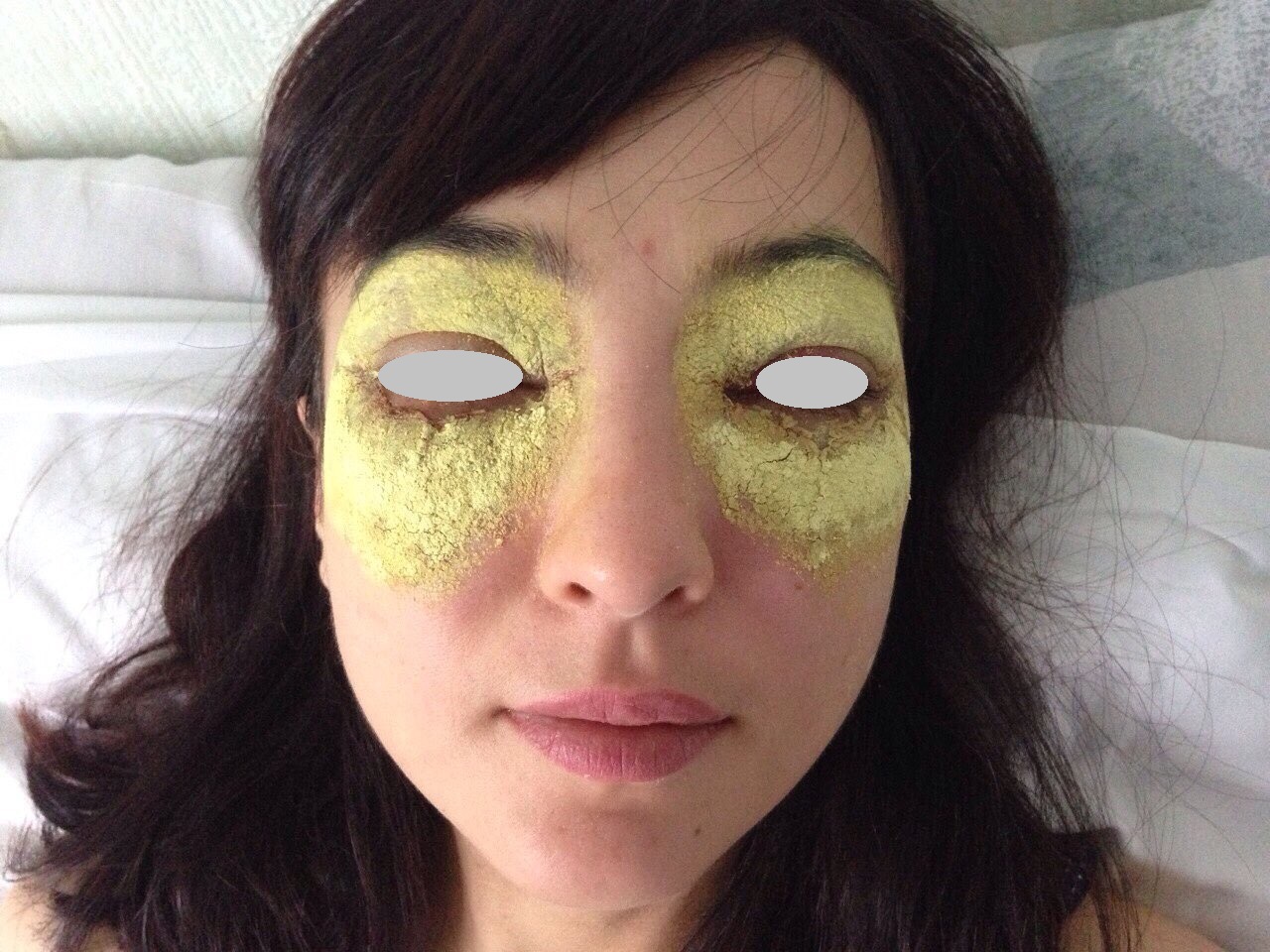
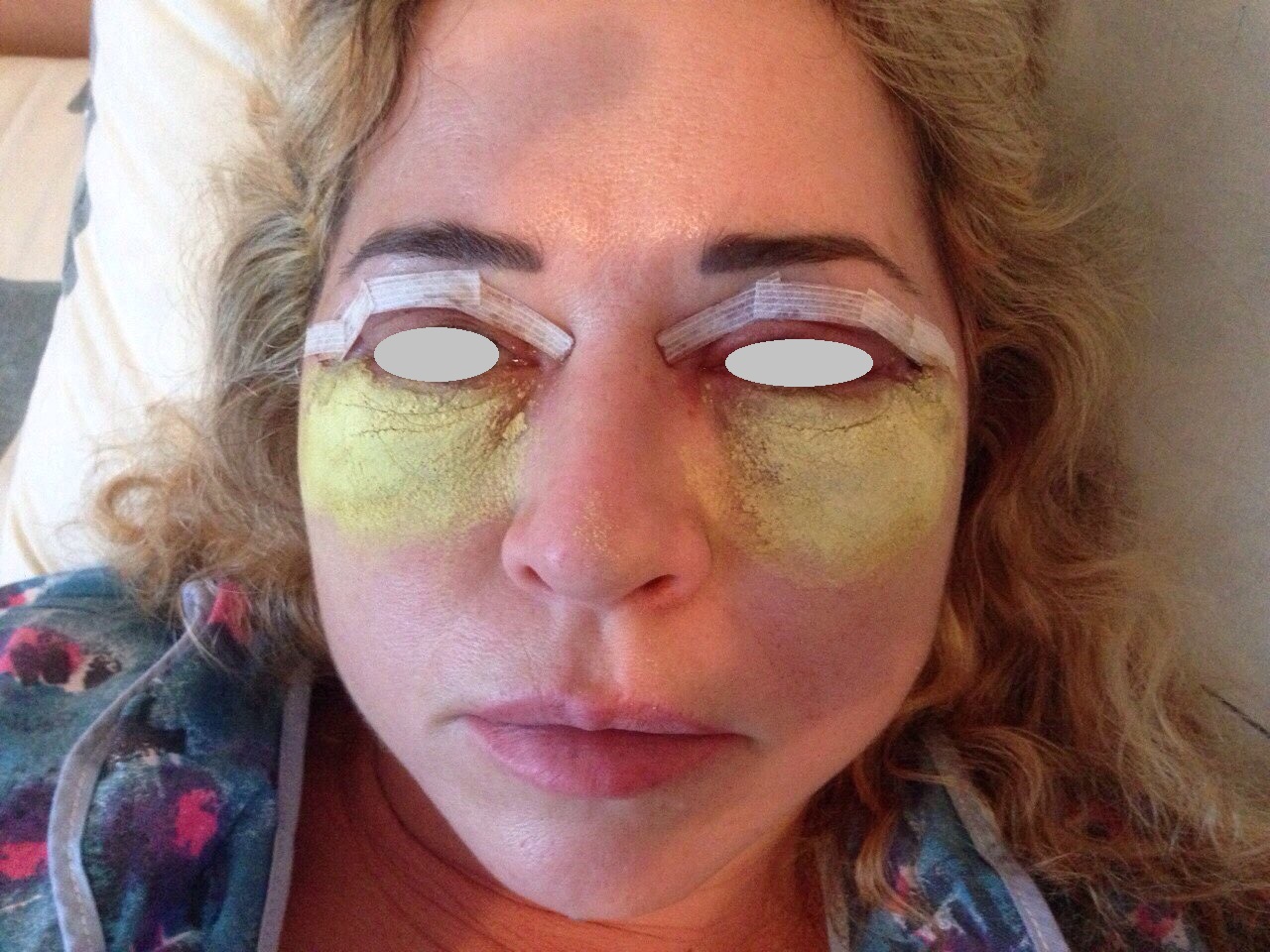
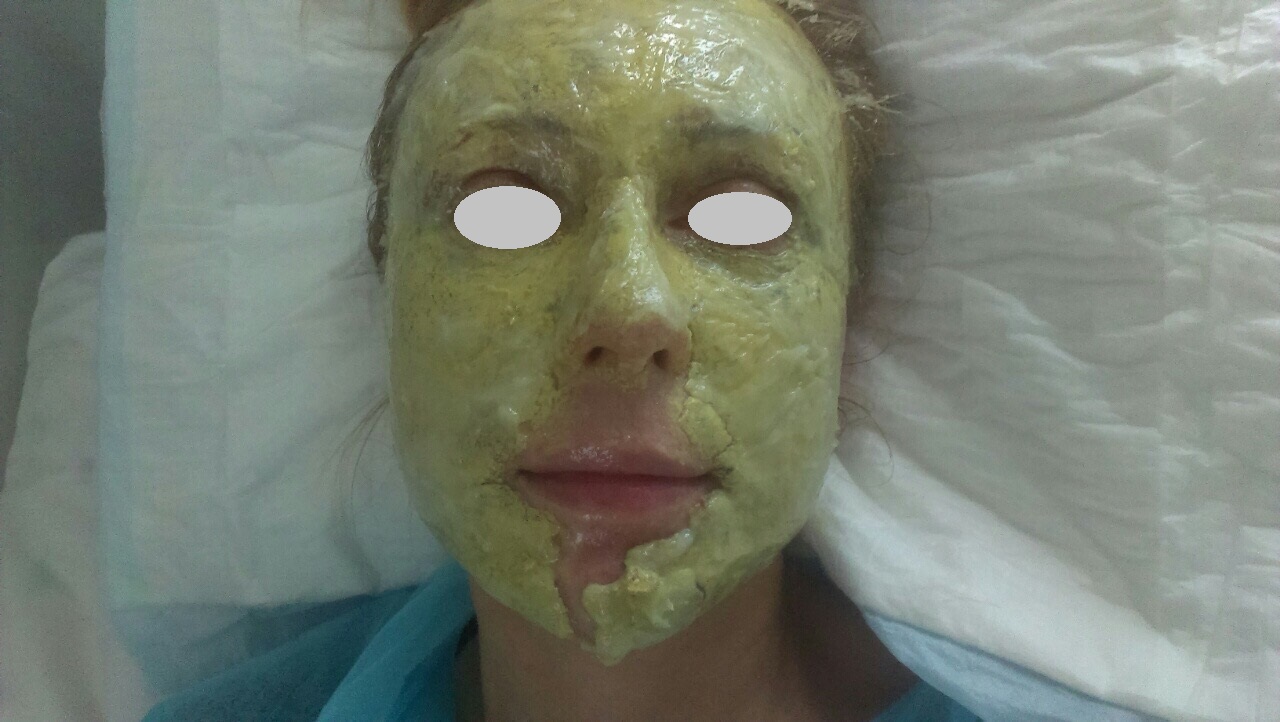
Next, we act according to the recommendations: to relieve the tension, after 3 days, apply Vaseline to the edges of the crust, and control the absence of infection. After 7 days, apply a thick layer of Vaseline to the crust, which softens it and promotes natural rejection (photo 2).
Frequent fears that stop doctors from using phenol peels are myths about the absorption of phenol through the skin with the formation of a general toxic effect on the patient’s body and the possibility of permanent depigmentation of the skin.
Regarding the first myth, phenol has been proven to have toxic effects only when high concentrations of vapor are inhaled. This clearly demonstrates the fact that patients who undergo even a full-fledged deep phenol peeling Lip Eyelid Formula on the entire face under endotracheal anesthesia do not experience toxic effects at all, which is reflected by hemodynamic parameters, real-time cardiac monitoring and subsequent laboratory test results. To prevent toxic effects, I suggest that cosmetologists refrain from total application of Lip Eyelid Formula on the entire face in a manipulation room, and reserve this procedure for a minor operating room or operating room. Cosmetologists can work with safer Easy Phen Light peeling, where the concentration of phenol is an order of magnitude lower, and its indications for use are much wider. Or use the above Easy Phen Light combination on the entire face after applying Lip Eyelid Formula to the perioral and periorbital areas. It is necessary to carry out the procedure in a room with forced exhaust ventilation. To prevent toxic effects, the patient should be asked to drink 2-3 glasses of still water within an hour and a half after the procedure (recommendations of doctors Gordon and Baker, developers of the very first phenol peeling formulas, which were unstable and prepared ex temporo).
As for depigmentation, this situation occurs in case of violation of the procedure protocol and bringing the frost to a gray color, which signals the penetration of peeling to the reticular layer and deeper, where coagulation of proteins and irreversible destruction of melanocytes occurs.
This situation can arise in the case of an excessive number of layers of peeling (which is why it is so important to undergo full training and learn how to correctly visually assess the depth of penetration of the peeling). Another type of severe complication is small superficial scarring, which can appear if deep phenol peels are performed frequently - for example, if a doctor performs deep phenol once every three years, then such a complication may appear on the third or fourth procedure. Visually, it looks like smooth, stretched, shiny skin with whitish dots that are visible upon close examination (the same effect can be obtained with frequent use of a CO2 laser, only unlike phenol, it also, in my opinion, reduces the immune defense of the skin .).
I consider the main indication for prescribing phenol-containing peels to be the presence of furrows (non-smoothed wrinkles, often with atrophic manifestations). A separate group includes patients with skin collagenosis: phenol peels are contraindicated for such patients, as they provoke the development of superficial fine scarring already in the first procedure. It is quite simple to differentiate such patients: the skin is like waxy parchment paper, atonic and as if varnished, and does not smooth out within five seconds after performing the pinch test. Skin collagenosis is often combined with hormonal diseases (pathology of the thyroid gland and adrenal cortex), so we can identify these patients already at the stage of collecting anamnesis and visual assessment.
In my practice, I constantly use various combinations of peelings, selecting individual programs, and I get excellent results and grateful patients (photo 4).
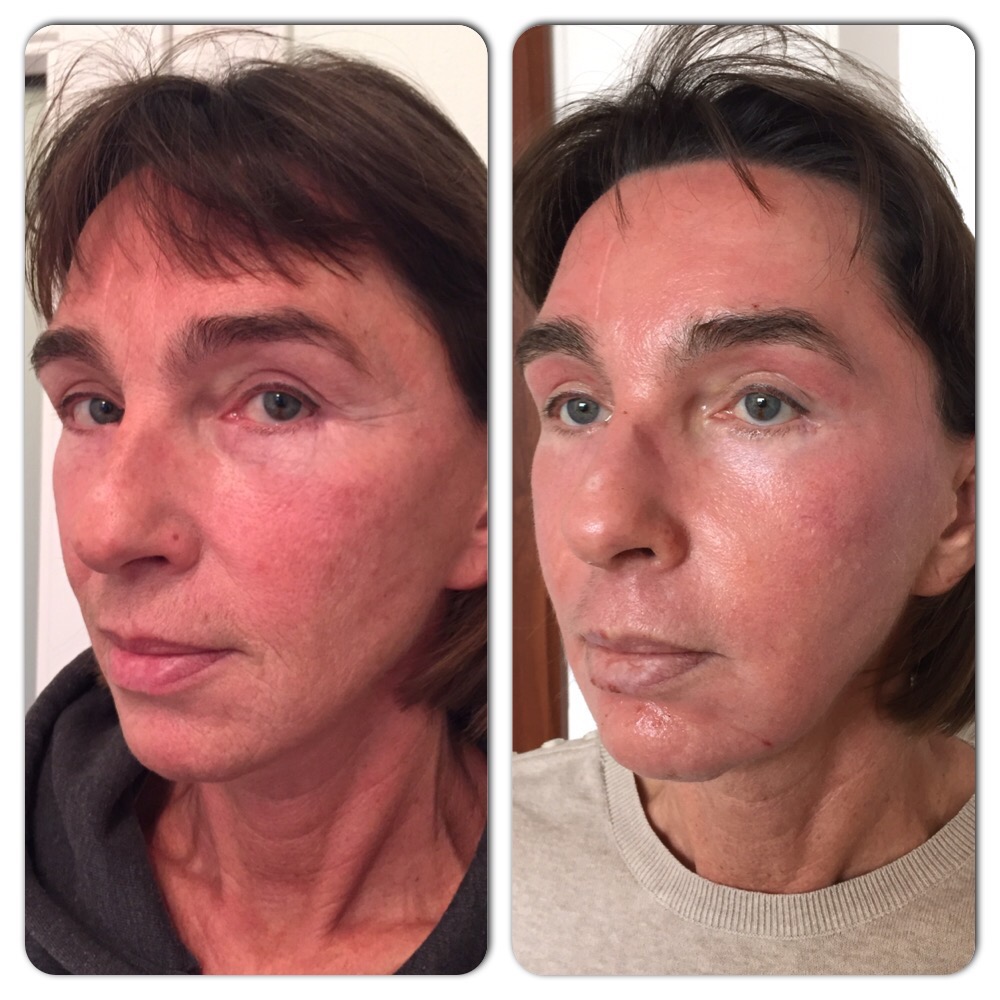
I completely agree with the late plastic surgeon Daniel Marshak, who said that without an aggressive procedure it is impossible to get a good, long-lasting result. That is why, if an aesthetic medicine doctor wants to have a true anti-aging stimulating effect on the skin, sooner or later he will be forced to start using medium and deep peels.
First published: "Les Nouvells Esthetiques Ukraine" 2/2016