What you need to know about polynucleotides?
Review of the effectiveness and safety of using drugs based on polynucleotides. Let's look at the latest generation of drugs and methods of use.
Polynucleotide-based drugs (PDRNs) are “prodrugs” that supply cells with a sufficient amount of mitogenic deoxyribonucleotides, deoxyribonucleosides and nitrogenous bases.

Effect of PDRN on the skin
Having an immunomodulatory effect, polynucleotides stimulate fibroblasts and the synthesis of nucleic acids, and also enhance the synthesis of collagen and neocollagen molecules. Due to this, drugs based on polynucleotides:
- stimulate repair processes;
- accelerate reepithelialization and scarring of the skin;
- ensure rapid and harmonious formation of granulation tissue in the wound area;
- increase the metabolic activity of cells;
- stimulate angiogenesis;
- enhance the moisturizing effect of hyaluronic acid;
- reduce the level of the pro-inflammatory cytokine TNF-a;
- are highly effective traps of free radicals (protect against damage by metabolites, xenobiotics, temperature factors);
- protect from UVB radiation.
Efficiency of PDRN
At the stage of preclinical studies of the possibilities of using a drug based on TwAc polynucleotides, its activity “in vitro” was studied in a test system, which was a culture of human epidermal cells. The complex significantly affects cell metabolism, increasing the rate of synthesis of intracellular proteins and DNA by 1.5-2.5 times. In this case, the pronounced effect depends on the concentration of the complex.
It has been proven that the identified stimulation effect extends through the immunocompetent cells of the epidermis to the entire immune system of the body as a whole.
Safety of PDRN
In its structure, PDRN is a fragment of a DNA molecule, a unique polymer molecule with various positive properties that affect cellular processes in the human body and homeostasis without any toxicity or contraindications.
Scientific studies of the drug TwAc have shown that low molecular weight DNA with a molecular weight of less than 500 kDa does not contain genetic information. It is known that such low molecular weight DNA cannot induce genetic transformation even in bacterial systems. There were no allergic or other adverse reactions or serious side effects.
Histological studies
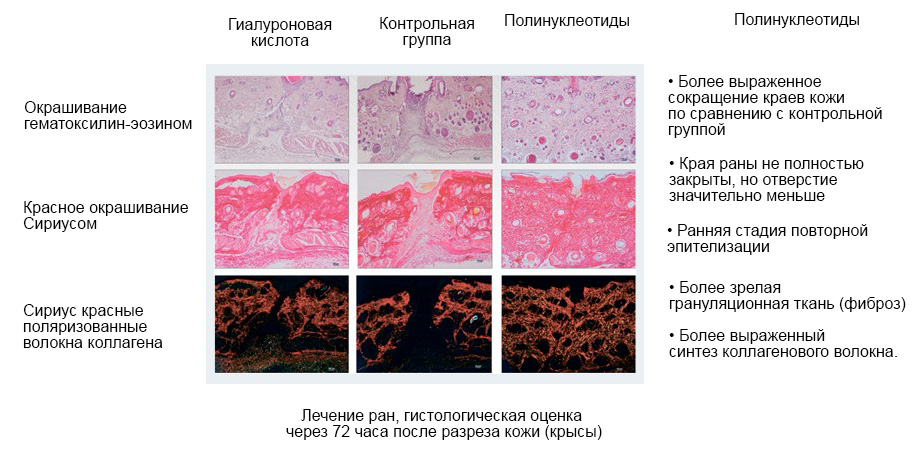
Treatment of wounds, changes at the histological level 72 hours after skin incision:
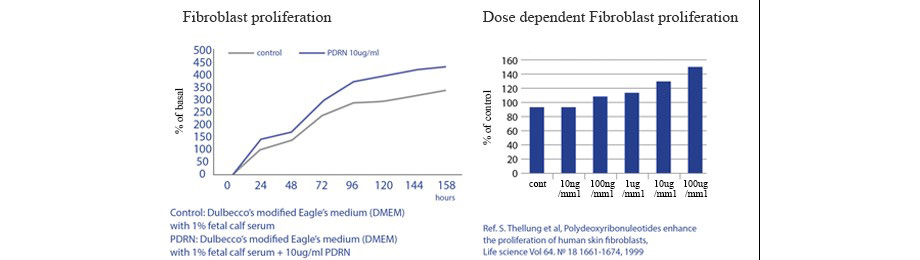
Increased collagen

Increased non-collagen structure proteins (fibronectin)

Latest generation drugs
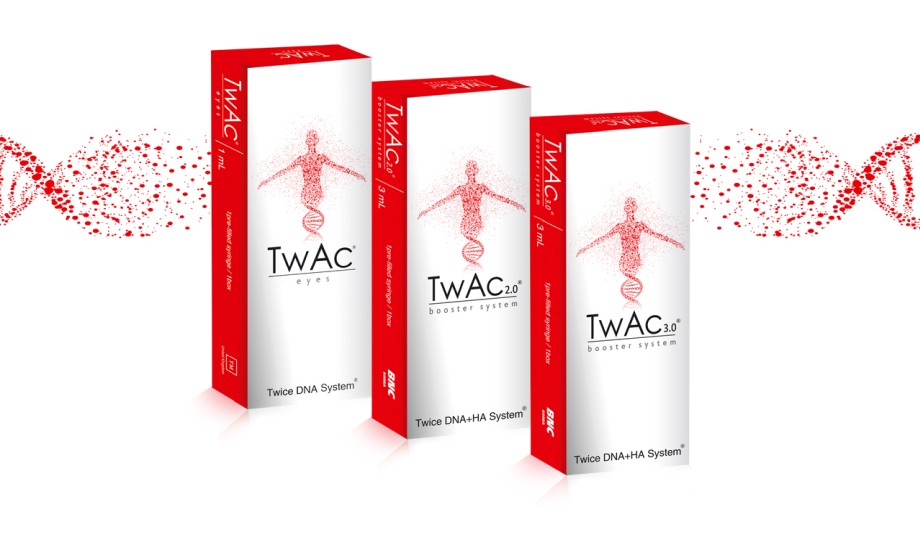
The drug TwAc is intended for intradermal administration, contains a high concentration of the active ingredient (PARN) and eliminates age-related changes for a long period.
Due to the ability of polydeoxyribonucleotides to bind and coordinate water molecules, it has a direct moisturizing effect, increases elasticity, turgor and skin tone.
Binds and neutralizes free radicals. Under the influence of extracellular enzymes, polynucleotide macromolecules are degraded with the formation of metabolites, which, in turn, induces antioxidant activity. Clinical effect up to 3 months.
Restores the balance of the elements that make up the amorphous matrix (glycosaminoglycans, glycoproteins, fibronectin and other proteins), as well as the fibrillar matrix (collagen, reticular fibers). As a result, we get improved skin texture and brightening of tissues.
Read also
- Post-injection reactions: complications and side effects after mesotherapy
- From redness to anaphylaxis: diagnosis and emergency care for allergic reactions
- Results of "Christmas LION" 2025: when fairy tale meets science
- What does hyaluronic acid provide in skin care?
- In focus: a revolutionary solution for the treatment of all types of hyperpigmentation
- Hypoxia of aging: the role of microcirculation in the pathogenesis of age-related skin changes
- In focus: 4D strategy in skin care for hyperpigmentation
- Zero risk: general principles for preventing complications from chemical peels
- Glycation and skin aging
- 4rest (Forest), company
- Rosacea
- Couperosis
- Angioneurosis
- Peloid therapy
- Waxes for depilation
- Fordyce granules
- Bogomolets Olga
- Microneedle therapy