Mesotherapy: complications and solutions
Mesotherapist tactics
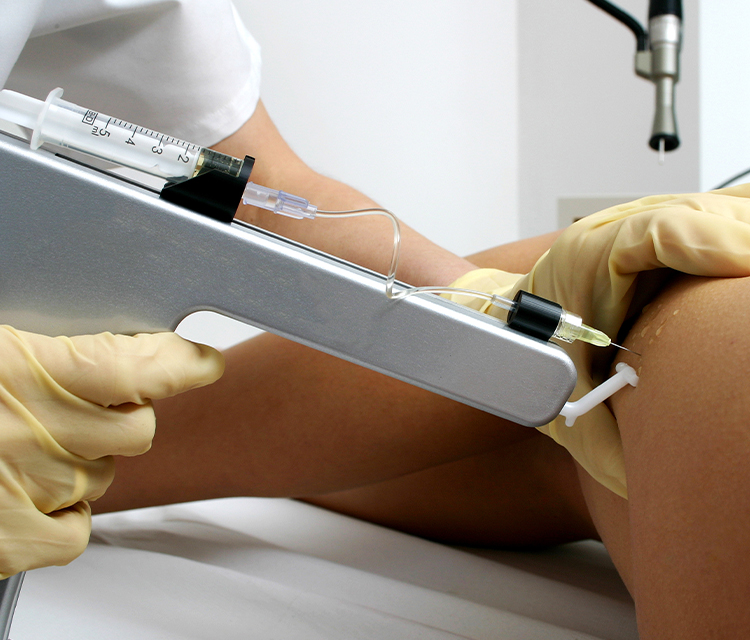
Let's understand the main adverse events in mesotherapy and how an aesthetic medicine specialist can cope with them.
Alexander Radionov , executive director, vice-president of the Ukrainian Association of Clinical and Aesthetic Mesotherapy “Mesotherapy of Ukraine” (Ukraine)
The doctor’s art lies precisely in choosing the most effective treatment method and drug with minimal harm to the patient’s health. In this case, the result should last for a long time. Complications, as a rule, arise from a low level of professional training, ignoring the rules of asepsis and antisepsis, and the use of illegal and unstudied drugs. And they arise in mesotherapy the less frequently, the higher the qualifications and intellectual level of the mesotherapist.
Adverse events in mesotherapy
It is necessary to immediately make a reservation: in mesotherapy one should not confuse such concepts as complications and undesirable effects. Often complications include such phenomena as pain, hemorrhages and hematomas, vascular reactions, point or linear damage to the skin, epidermal detachment, etc. In the practice of mesotherapy, these are undesirable side effects, payment for the benefits that mesotherapy provides in treatment and disease prevention, in the correction of aesthetic defects.
Painful sensations
Physiological pain (short-term and moderate pain) has physiological significance, as it stimulates the release of catecholamines, the production of endorphins, somatotropin, collagen production, lipolysis, improved perfusion, and much more. etc.). The painfulness of procedures is influenced by various factors, knowing which you can avoid some phenomena.
1. Individual characteristics of the patient:
- pain sensitivity threshold;
- biorhythms (season, time of day, menstruation in women, etc.);
- the presence or absence of stressful situations (medical help is often sought precisely during stress);
- psycho-emotional state and attitude towards the final result.
A course of mesotherapy must be planned taking into account these factors.
2. Errors in technique or the need to perform certain techniques.
In the first case, developing practical skills, using low-traumatic needles and mesoinjector modes can help. In the second, methods of anesthesia and analgesia are more relevant.
3. Local irritation of pain receptors with drugs.
To avoid this, it is necessary to know mesopharmacology, correctly use local anesthetics as part of mesotherapy mixtures, or practice preliminary anesthesia (analgesia) to reduce the pain of the procedure.
Bleeding, hemorrhage, hematoma
Local bleeding and hemorrhage are an inevitable reality of injection methods of drug administration (with penetration through the basement membrane of the skin where the vessels are located). The severity of bleeding and hemorrhage depends on:
- the diameter of the needle and the properties of the vessel (the larger the diameter of the needle, the lumen of the vessel, the blood pressure in it, the more extensive the hematoma);
- the state of the patient’s blood coagulation and anticoagulation systems;
- condition of the vascular wall (vascular permeability, capillary fragility; in women, the period of the menstrual cycle is of great importance).
During mesotherapy, single or multiple hemorrhages and microhematomas may occur, which are a cosmetic defect if they are located on open areas of the skin. In addition, they serve as a powerful stimulus for the coagulation and anticoagulation systems of the blood, immunity, local enzymatic processes, repair processes, skin protein synthesis, etc.
You can minimize hemorrhages by:
- correct implementation of mesotherapy techniques and methods;
- using atraumatic thin needles with a diameter of 0.26–0.3 mm;
- pressing the perforated vessels until bleeding stops completely, applying cold;
- correct selection of drugs;
- correction of the state of the blood coagulation system (cancellation of anticoagulants and antiplatelet agents one day before and 2–3 hours after a mesotherapy session);
- strengthening the vascular wall and reducing its permeability (angioprotectors mesotherapeutically and systemically);
- correction of general and local blood pressure (arterial and venous);
- avoiding needle penetration into superficial vessels.
Erythema
Even a simple mechanical effect on the skin usually causes a change in skin color (“white” or “red” dermographism), depending on the predominance of the influence of the sympathetic or parasympathetic nervous system in the patient. Mesotherapy irritation of skin receptors is a more powerful stimulus, so a vascular reaction can be observed in almost all patients.
Mesotherapy often causes an inversion of vascular tone (against the background of erythema - pallor, against the background of pallor - redness of the skin). This indicates the regulatory influence of the mechanical effect of the mesoneedle on the receptors of the nervous and vascular systems located in the skin, with the primary effect on the nervous system. The use of vasoactive drugs allows you to achieve the desired result - dilation or constriction of blood vessels.
Physiological erythema that occurs during mesotherapy usually disappears within 20–40 minutes, with the exception of cases (due to indications or ignorance) of the use of vasoactive or irritating drugs. Vasoconstrictors in mesotherapy are used only according to strict indications, since persistent vasoconstriction can lead to local dystrophy and even necrosis of the skin. Pathological changes in microcirculation require treatment, as they can lead to pathology of the skin and pancreas.
Complications
Complications in mesotherapy can be divided into the following groups:
- iatrogenic (iatros - “doctor”) - caused by the actions of medical personnel (a doctor without proper qualifications, who does not adhere to the rules of antiseptics, who does not have sufficient knowledge and practical skills in mesotherapy and mesopharmacology, who does not know the specifics of the mesotherapeutic use of drugs), in the worst case - caused by the actions of nursing staff or cosmetologists who have no medical education at all;
- man-made – caused by improper use of equipment and administration techniques;
- pharmacogenic – caused by the action of drugs;
- mixed.
In addition, complications can be unpredictable and predictable.
Unpredictable complications are those that cannot be foreseen, and therefore prevented and treated. They arise when using mesomedicines of dubious origin, with an unknown composition, not registered as pharmaceuticals, and without official recognition, description and detailed instructions.
Predictable complications should be considered side effects of drugs in cases of idiosyncrasy, overdose or unreasonable use, but subject to knowledge of their full composition (and not just the main active ingredients), since auxiliary components can cause undesirable reactions - from local irritation to anaphylactic shock.
The most dangerous possible complications are immediate allergic reactions that threaten the patient’s life.
In second place are infectious or infectious-toxic, as well as histotoxic (necrotic) complications. First, local inflammatory reactions may occur (infiltrates, lymphangitis and lymphadenitis, abscesses, gangrene), and without adequate assistance, general ones (sepsis, infectious-toxic shock).
Complications associated with side effects of medications are less dangerous for the patient. With knowledge of clinical pharmacology in general and mesopharmacology in particular, a specialist is quite capable of predicting them, has the ability to prevent them, and, if they occur, to effectively treat them.
Examples of predicted complications
Incompetence - the use of triiodothyronine in the treatment of cellulopathy (cellulite, hydrolipodystrophy, obesity). Often, without prior endocrinological examination and indications, single-dose medications or ready-made cocktails containing thyroid hormones (triiodothyronine, triac, thyrotricol) are used.
Possible consequences of such therapy may be:
- thyrotoxicosis;
- manifestation or progression of thyroid pathology (goiter, thyroiditis);
- inhibition of the production of own hormones;
- the production of antibodies that block externally introduced and own hormones;
- mutual inhibition of TSH secretion and increased secretion of thyreostatin (triac is used precisely for the purpose of suppressing TSH);
- withdrawal syndrome.
What could be the consequences for the patient’s health with such therapy (remember, for example, the cases with the Li Da dietary supplement)?
Overdose is a possible complication of lipolytic therapy using methylxanthines. Most patients tolerate this treatment well, however, hypotensive and astheno-neurotic patients sometimes exhibit a hyperstimulation reaction such as sympatho-adrenal crisis, so it is necessary to take into account such characteristics of the patient’s body and the external lipolytic agents they use, which often contain drugs of this group.
The use of drugs often has no etiopathogenetic justification. Many active substances are credited with an effect that they do not have, for example, thiocolchicoside is defibrosing, calcitonin is lipolytic, etc. Before using any drug, it is necessary to become thoroughly familiar with its composition, mechanism of action, possible side effects, and contraindications. In addition, it is necessary to study the experience of using drugs by other specialists both in Ukraine and abroad.
Use of high molecular weight substances. In an effort to increase skin turgor, collagen and elastin are introduced. What could this mean?
- Allergic reactions are most often caused by proteins, which include these substances.
- An excess of protein, for example collagen, causes increased production of proteolytic enzymes, in this case collagenase, which destroys both exogenous and endogenous collagen (in this case, a primary pronounced cosmetic effect occurs, which is replaced by subsequent dermodystrophy, leading to dependence on the introduction of protein from the outside).
- Point injection of collagen does not create conditions for its “correct” distribution in connective tissue, since it has a high molecular weight, which limits its diffusion, and in the injection area, viscous substances cause compression of blood vessels, which leads to ischemia.
The following example concerns the use of the drug phosphatidylcholine (PC), which is credited with a lipolytic effect. In fact, it causes tissue necrosis. Local use of FQ is prohibited throughout the world, even in the USA, where it is actively promoted. It is used exclusively to reduce local fat deposits (steatoma, lipoma). With its extensive administration, tissue necrosis occurs, similar to necrosis from the introduction of calcium chloride into soft tissues. What happens at the site of necrosis? Tissue destruction, that is, alteration, is the first stage of inflammation, followed by the stages of exudation and proliferation. The outcome of this process is the formation of connective tissue – fibrosis and sclerosis. What does this mean for the patient? At the beginning, he will be bothered by swelling and pain, then they will decrease or go away, perhaps even the result will be visible, but the process in the pancreas will continue. As a result, cellulite will begin to progress again over time, but already in the stage of fibrosis, which means that you will subsequently have to deal with edema, fibrosclerosis, and steatoma.
Allergic reactions
A pathological reaction to a drug or its components may manifest itself in the form of idiosyncrasy or allergy.
Idiosyncrasy is an increased or perverted reaction of the body to a drug or a chemical compound similar to it due to individual incompatibility with the body. Quite often, idiosyncrasy is congenital. This condition is dose-dependent: the higher the dose, the more pronounced the reaction.
Allergy is an increased or perverted reaction of the body to repeated administration of a drug or its components. Unlike idiosyncrasy, allergies, as a rule, are acquired rather than congenital. Allergy is an altered form of the immune response, which manifests itself in the development of a specific increased sensitivity of the body to foreign substances of various composition and origin (allergens) as a result of previous contact with these substances. The formation of allergies is facilitated by the chemicalization of everyday life, industry, agriculture, medicines, large-scale immunoprophylaxis, increased consumption of animal protein, etc. Allergens can be chemicals of any nature, which, when they enter the body, cause sensitization to them. Unlike idiosyncrasy, an allergic reaction can develop when even a very small amount of allergen enters the body. Cases of the development of anaphylaxis during intradermal allergy tests have been described.
There are 3 stages in the development of allergic reactions:
1. Sensitization. In response to an allergen entering the body, antibodies are produced. This process takes about 2 weeks. The accumulation of a sufficient amount of antibodies for a reaction when the allergen re-enters the body leads to the development of the next stage - resolution;
2. Permission. It occurs as a reaction to repeated exposure to an allergen or sometimes to an allergen that remains in the body for more than 2 weeks. This is the stage of clinical manifestations, which can occur in 2 types:
- immediate hypersensitivity, GNT - from a few seconds to 6 hours,
- delayed type hypersensitivity, HRT – 24–48 hours;
3. Desensitization. A return to normal reactivity can occur spontaneously and occurs on its own after eliminating the effect of the allergen or artificially after a course of introducing the allergen in microdoses (fractional desensitization).
Substances of a protein nature (vaccines, serums, foreign immunoglobulins, protein preparations, dextrans) are full-fledged antigens and cause the formation of antibodies in the body, and then react with them. Most drugs are haptens, which acquire antigenic properties only after combining with blood serum or tissue proteins. An allergic reaction can be caused by any drugs, including antiallergic drugs and glucocorticoids. The likelihood of developing allergic reactions when taking drugs orally is lower; the risk increases with intramuscular administration, becomes even greater with intravenous administration and reaches a maximum level with intradermal administration of drugs. Allergic reactions vary in how quickly they develop.
The first group consists of reactions that sometimes occur instantly or within the first hour after the drug enters the body:
- anaphylactic shock,
- acute urticaria,
- Quincke's edema,
- bronchospasm,
- acute hemolytic anemia.
The second group includes subacute allergic reactions that develop during the first day after administration of the drug:
- agranulocytosis,
- thrombocytopenia,
- maculopapular exanthema,
- fever.
The third group consists of reactions of a protracted type, developing within several days or even a week after administration of the drug:
serum sickness,
allergic vasculitis and purpura,
arthralgia and polyarthritis,
lymphadenopathy,
damage to internal organs (allergic hepatitis, nephritis, myocarditis, etc.).
Clinical manifestations depend on the localization of sensitized tissues: in the case of the bronchial epithelium - an attack of bronchial asthma, the laryngeal epithelium - laryngeal edema, skin - urticaria, etc. The most dangerous to the life and health of the patient are allergic reactions of the immediate type, and among them - anaphylactic shock, Quincke's edema and status asthmaticus.
Mesotherapist tactics
To prevent complications during mesotherapy, it is important to understand the underlying processes and carefully prepare for the course of procedures.
To prevent allergic and histotoxic reactions, first of all, it is necessary to carefully collect an allergic history and conduct allergy tests. Among the medications, it is worth choosing the least allergenic ones, avoiding polypharmacy (simultaneous prescription of multiple medications), taking into account the chemical structure and possible transformations in the composition of the mixture. For injections, it is necessary to use only drugs with studied properties and tissue tolerance.
The treatment room should be equipped with equipment and medications to provide assistance, instructions for providing pre-medical and medical care, located in an easy-to-read place.
It is also worth noting that the patient must remain in the facility for at least 40–60 minutes after the administration of the drugs.
If you suspect an allergic reaction, you must stop the session and conduct dynamic monitoring. If suspicions are confirmed, begin providing medical care, while simultaneously calling an ambulance.
It is necessary to prepare information about the drugs administered (commercial name of the drug/drugs, composition of the combination, active ingredients and additional components, release dates, serial numbers of drugs, doses administered, methods of administration, results of an intravenous allergy test, etc.).
Although severe allergic reactions are extremely rare in mesotherapy, the doctor must be prepared to provide emergency medical care, and the patient must be informed about the possible consequences of mesotherapy (not only complications, but also possible hematomas and painfulness of the procedure), behavior during the rehabilitation period, etc.
In case of a burdened allergy history, it is necessary to examine the blood for the total level of IgE. Its increase (sometimes 20–40 times) is a reason for a more detailed examination. Considering that antibodies are produced within 2 weeks after the first administration of the allergen, it is advisable to carry out an intravenous test twice, with an interval of 2 weeks. In intravenous mesotherapy, an allergy test should be carried out on the inner surface of the forearm with a ready-made mixture, without dilution, since dilution will not eliminate the occurrence of an allergic reaction, and using the ready-made mixture, conclusions can be drawn about histological tolerance.
Thus, to reduce side effects and avoid the risk of complications, it is necessary to emphasize the following:
- A specialist practicing mesotherapy must have a higher medical education, the necessary knowledge in the field of mesotherapy, clinical pharmacology, and medicine in general;
- Sessions must be carried out in a specially equipped room, where there is everything necessary to provide emergency care;
- It is permissible to use only registered drugs with a known composition and mechanism of action, possible side effects, which makes it possible to prevent and, if necessary, treat complications;
- Before treatment, it is necessary to examine the patient in detail in order to identify indications and contraindications for the use of certain drugs;
- It is necessary to carefully collect an allergy history and conduct an allergological examination;
- The mesotherapist must follow the rules of asepsis and antisepsis and be fluent in the methods and techniques of mesotherapy.
Competent tactics of a specialist, his professionalism and experience will help minimize possible complications and undesirable consequences in mesotherapy.
First published: KOSMETIK international journal, No. 1(39), 2010
Read also
- Mesocorrection of the figure: programs for the treatment of aesthetic body imperfections
- Correction of involutional changes: mesotherapy for elderly patients
- Minimally invasive techniques: mesotherapy
- Mesotherapy as a method of treating alopecia: promising components
- Mesotherapy for hyperpigmentation
- Injection therapy of cellulite
- Lipolytic mesotherapy
- Mesotherapy and oxidative stress
- Combined use of peeling procedures with revitalizing mesotherapy
- Mesotherapy
- Invasive procedure