Correction of involutional changes: mesotherapy for elderly patients
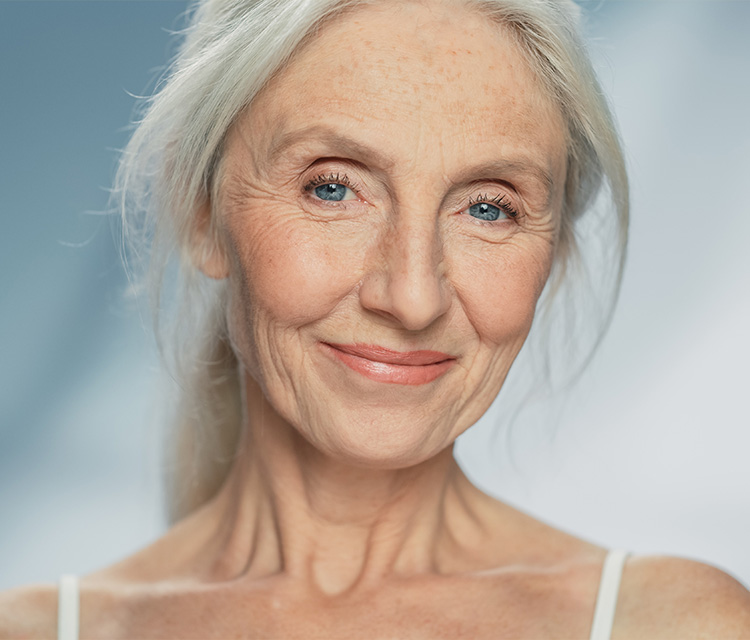
The aging process of the human body is natural and inevitable, and the mechanisms of aging are quite complex and diverse. Today, there are several alternative theories that partly contradict each other, and partly complement each other. Modern biology pays a lot of attention to the problem of aging, and every year new facts appear that allow us to understand the mechanisms of this process more deeply.
With age, metabolic processes slow down, and the activity of organs and systems decreases, although according to the genetic program, a person can live 110–120 years! However, under the influence of various adverse factors - both exogenous (UV radiation, radiation, electromagnetic radiation, bad habits, unhealthy lifestyle) and endogenous (heredity, chronic diseases, etc.), the aging process accelerates.
Gradually, the epidermis begins to thin, the rate of renewal of epidermal cells decreases, desquamation processes slow down, the skin becomes coarser, lipid synthesis decreases, and fluid binding in the stratum corneum is disrupted.
The size and number of cells in the dermis decreases. The elasticity and resilience of the skin is provided by the main structural protein of the intercellular matrix - collagen, the synthesis of which is carried out in connective tissue cells - fibroblasts. The number of fibroblasts and their ability to synthesize collagen decreases. Damaged collagen fibers contribute to a decrease in the density of the dermis.
Full version of the access article in Ukrainian
Read also
- Hypersensitivity and mesotherapy: diagnosis of allergic reactions and toxic responses
- Post-injection reactions: complications and side effects after mesotherapy
- Mesocorrection of the figure: programs for the treatment of aesthetic body imperfections
- Mesotherapy for elderly patients: correction based on morphotypes
- Classics and modernity: what mesotherapy can do
- Mesotherapy: a timeless classic
- Minimally invasive techniques: mesotherapy
- Mesotherapy as a method of treating alopecia: promising components
- Mesotherapy
- Invasive procedure