Hardware cosmetology: basic techniques
In aesthetic medicine, there are many devices that differ significantly from each other in terms of creation technology, methods of influence and, of course, results.
Specialists need to be well versed in these subtleties in order to correctly select the device with the appropriate impact force and the desired effect for each client. This article provides a brief overview of the main techniques for making the best choice.
Electroporation
Electroporation is a method of non-invasive transdermal transfer of drugs and cosmetic ingredients into the deep layers of tissue. Thanks to special electrical impulses that increase the permeability of cell biomembranes, channels open in the skin through which drugs (including high molecular weight) easily penetrate the skin and subcutaneous tissue. Electroporation is fundamentally different from the electrophoresis (iontophoresis) method, which uses positive and negative electrodes. Unlike electrophoresis, there are no burns during electroporation, so the method is absolutely safe.
Using this method, any substance can be introduced into the deep layers of the skin, regardless of their charge and molecular weight.
Such properties of electric current were discovered during research in genetic medicine not so long ago. Quite soon, the electroporation method found wide application in cosmetology and is currently very popular in Europe.
The electroporation procedure is ideal for eliminating wrinkles, smoothing nasolabial folds, improving skin structure, rejuvenation, restoring oval shape and complexion, treating rosacea, eliminating cellulite, stretch marks, recovering from plastic surgery, and stimulating hair growth. Thus, during electroporation of the scalp, the so-called “dormant bulbs” are stimulated and hair growth processes are reactivated. The drugs used are delivered to a depth of 4-5 mm and affect all layers of the scalp.
Contraindications to the electroporation procedure:
- pregnancy and postpartum period;
- heart disease and/or obvious cardiovascular pathologies;
- epilepsy;
- kidney disease, hepatitis;
- metal prostheses, pacemaker, insulin pump, etc.;
- herpes zoster (during illness and remission);
- period after radiotherapy or chemotherapy for three months;
- neoplasms;
- skin lesions;
- individual intolerance to the solution penetrating under the skin;
- individual intolerance to electrical stimulation devices;
- any other pathology that may put the patient's health at risk.
Radiofrequency lifting
According to leading cosmetologists, the future of anti-age therapy belongs to radiofrequency lifting.
Until recently, when talking about non-invasive methods of rejuvenation, we always compared them with surgical lifting, as with some kind of aesthetic standard that can rejuvenate by several decades. With the advent of RF techniques, the situation has changed. Today it can be argued that radiofrequency therapy is a procedure that is not only comparable to plastic surgery, but also significantly superior to it in certain aspects.
As a result of deep, controlled heating of the dermis, collagen fibers are shortened and seem to “shrink.” This leads to an immediate visible tightening effect on the skin of the face or other area.
In addition, after a course of procedures, there is a powerful stimulation of the formation of new collagen in the dermis and its deep layers.
At the same time, the following processes are launched in the skin and subcutaneous fat:
- restoration of energy balance due to impact on the roots of the problem;
- stimulation of fibroblasts and collagen formation processes;
- increasing blood flow speed and improving microcirculation, eliminating blood stagnation in capillaries;
- restoration of elasticity and permeability of vascular walls;
- release of interstitial tissue from fluid stagnation due to cellulite;
- restoration of the temperature necessary to begin the breakdown of fats;
- restoration of the ability of fat cells to maintain proper metabolism of fats on the cytoplasmic membrane;
- interruption of the process of fibrosis in subcutaneous fat;
- improving the conditions of circulation and oxygen saturation of damaged anatomical structures;
- restoration of natural anti-aging processes, true and complete skin rejuvenation.
All this leads to changes in the elasticity of the skin, making it possible to improve the condition of aged skin, enhance anti-aging effects and carry out new skin modeling.
The procedure is fully compatible with other techniques - photorejuvenation, chemical peels, mesotherapy. When the techniques are used in combination, the effect is mutually reinforcing.
The radiofrequency therapy procedure is used for:
- lifting in the cheekbones and cheeks, reducing nasolabial folds and wrinkles around the mouth, lifting and strengthening the contours of the lower face and neck, reducing pore size;
- correction of wrinkles in the outer corner of the eye (“crow’s feet”), lifting of the upper and lower eyelids (including bags under the eyes), strengthening of the skin in the periorbital area;
- effective lifting of the abdominal skin after childbirth, liposuction, after sudden weight loss, due to age-related changes;
- increasing tissue tone on the skin of the shoulders and knees, inner thighs and buttocks;
- stretch mark regression;
- improving the appearance of post-acne scars.
Main action:
to adipose tissue:
- stimulation of metabolism;
- destruction of fat cells;
- removal of lipids into the intercellular space.
on connective tissue:
- neoelastogenesis, neocollagenogenesis;
- thickening of the dermis;
- reduction of subcutaneous fat;
- lifting and increasing skin elasticity, activation of fibroblasts;
on the circulatory and lymphatic systems:
- activation of the circulatory and lymphatic systems;
- activation of the removal of intercellular fluid, toxins and lipids.
Contraindications to the radiofrequency therapy procedure :
- pregnancy and postpartum period;
- cardiovascular pathologies;
- neoplasms;
- skin lesions;
- metal prostheses (at the procedure sites);
- electronic cardiac stimulator;
- any other pathology that may put the patient's health at risk.
Stratosphere Compression & Vibration
Compression
Following the lymphatic drainage lines, the specialist moves a cylinder-manipule over the client’s body. The handpiece creates a calibrated sinusoidal effect. In this case, the pressure on the skin is strictly dosed and is determined by the weight of the manipule.
Vibration
The rotation of the spheres generates microvibrations and enhances the fat burning process. Blood circulation and oxygen saturation of cells improves, a natural outflow of metabolic products and excess fluid occurs, and the volume of subcutaneous fat is reduced.
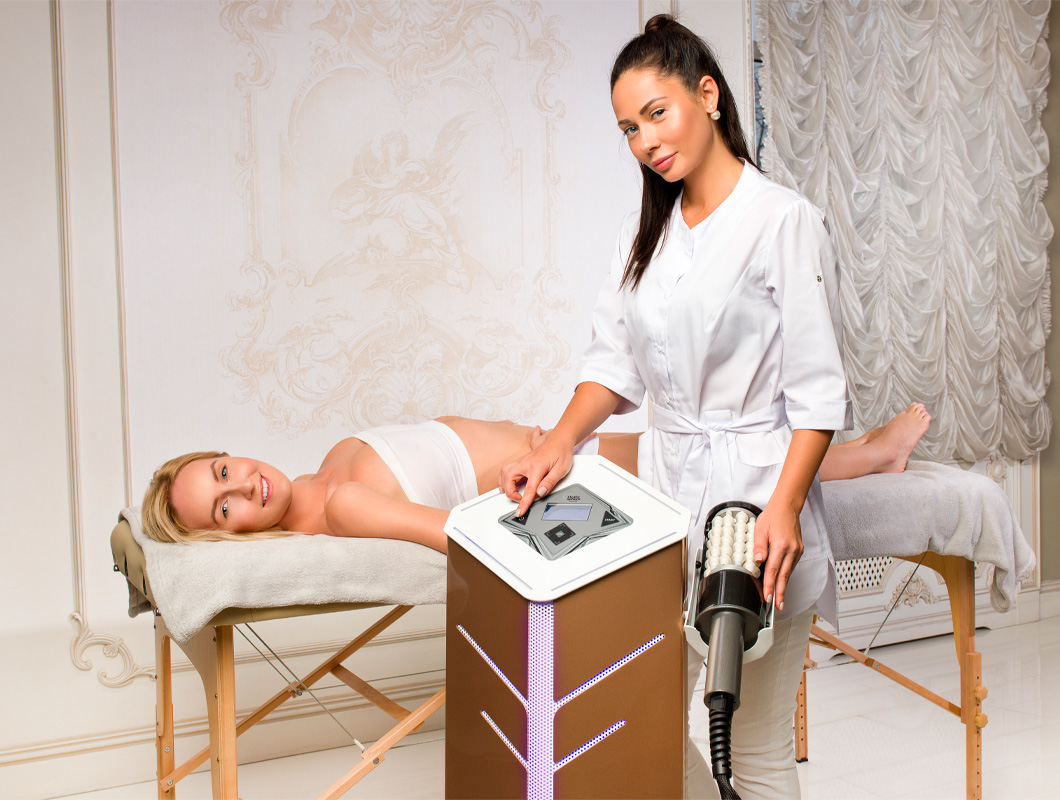
Stratosphere is a professional German equipment for figure correction , the effectiveness of which has been clinically proven by Dermscan . Thanks to the compression and vibration technique, Stratosphere eliminates cellulite, reduces body volume, removes excess weight, restores skin tone, and gives a push-up effect to the buttocks. This massage device helps eliminate the root causes of cellulite without damaging or stretching the skin and subcutaneous layers. Using individual settings for each patient, as well as the ability to massage both oil and suit, with
Stratosphere can achieve a natural transformation of your figure.
Pressotherapy
Pressotherapy is aimed at removing excess interstitial fluid and promoting drainage of the venous system and improving lymphatic circulation.
In addition to venous and lymphatic drainage, pressotherapy is also useful in cases of edematous cellulite and decreased skin tone. Widely used in medicine for the treatment of post-traumatic, venous, postoperative edema, lymphedema.
Pressotherapy is widely used in combination with cavitation procedures to treat cellulite and reduce the volume of adipose tissue.
During the pressotherapy procedure, the patient is put on a special suit (special long boots are used for the legs, a wide belt for the abdomen and hips, and long gloves for the hands). Elastic cuffs connected to the device by air ducts exert a mechanical effect on the skin, subcutaneous fat, muscles, deep venous and lymphatic vessels of the extremities, created by alternating high and low air pressure. The period of alternating compression and vacuum is from 30 seconds to 2 minutes. When the pressure in the cuffs decreases, the blood vessels dilate, increasing blood flow to the skin, subcutaneous tissue and muscles. Active lymphatic drainage enhances the removal of excess fluid and toxins from the body, restores water balance, improves venous circulation, activates metabolic processes in the skin, eliminates tissue hypoxia and stagnation of intercellular fluid in subcutaneous fat - the main cause of cellulite.
Benefits of pressotherapy:
- the procedure can be performed on patients for whom electromyostimulation, ultrasound or manual massage are contraindicated;
- the result of the procedure is comparable to the effect of potent diuretics, but does not lead to dehydration of the body;
- the procedure is very comfortable and has a relaxing effect;
- The procedure goes well with body wraps, mesotherapy, and other hardware methods of figure correction.
The pressotherapy procedure is used for:
- elimination of cellulite and local fat deposits;
- combating excess weight, edema of various origins, chronic venous insufficiency;
- restoration of skin elasticity;
- rehabilitation after surgery;
- Eliminate heaviness in the legs and muscle strain.
Contraindications to the pressotherapy procedure:
- inflammation of varicose veins and thrombosis;
- pregnancy and postpartum period;
- neoplasms;
- heart and kidney failure;
- lymphangitis;
- systemic infectious processes;
- arteriopathy;
- other diseases that may cause harm or make the procedure hazardous to health.
Phototechnology
The mechanism of photorejuvenation is based on the principle of selective photothermolysis - selective absorption of light by any colored tissues (chromophores) with their subsequent heating and destruction. In this case, the tissues surrounding the target remain intact. The manifestation of vascular pathology is corrected due to thermal coagulation of blood vessels. The chromophore that interacts with light in this case is hemoglobin. Pigment spots disappear or lighten due to the destruction of melanin pigment. Modeling of exposure modes (individually selected combination of flash parameters: number of flashes, duration and power of the pulse, duration of the relaxation period) makes it possible to achieve pronounced selectivity, that is, targeted destruction of the pathological formation without significant impact on surrounding structures and tissues.
Photorejuvenation, aimed at increasing turgor and elasticity, as well as reducing enlarged pores, is ensured by warming the deeper layers of the skin, stimulating proliferation and the processes of collagen and elastin synthesis. At the same time, vascular collaterals open, blood circulation and tissue nutrition improve. The effect of the procedure is cumulative: collagen synthesis reaches its maximum 5-6 months after the end of the course of treatment.
Photorejuvenation is a virtually painless and safe procedure and is not accompanied by side effects, since it does not damage the skin, so there is no need for rehabilitation.
Indications for the photorejuvenation procedure :
- the presence of vascular lesions (telangiectasia, rosation) and foci of hyperpigmentation (freckles, solar lentigo);
- changes in skin texture, decreased tone, presence of wrinkles;
- oily skin, enlarged pores.
Contraindications to the photorejuvenation procedure:
- photodermatoses;
- taking medications that increase sensitivity to light (tetracycline, retinoids, etc.);
- pregnancy;
- malignant neoplasms of the skin;
- herpetic infection in the acute stage;
- acute chronic skin diseases and their exacerbation;
- period after radiotherapy or chemotherapy for 3 months;
- availability of functioning devices such as pacemakers, incontinence devices, insulin pump, etc.;
- steroid treatment (asthma) within the last 3 months.
Before the procedure, it is necessary to assess the condition of the patient’s skin, especially paying attention to the level of melanin and hemoglobin, as well as the depth of the skin, skin type, exposure to sunlight, the presence of self-tanning, and various damage to the skin surface. All age spots must be considered benign before pulsed light treatment begins. It is recommended to carry out the test and evaluate the results on skin types I-III after 20-30 minutes, on skin above type III and tanned - after 24 hours.
Laser radiation
Laser radiation is a type of physical energy not found in natural light sources. This radiation is produced by special devices - optical quantum generators (OQGs) of various designs, called lasers (from the English phrase Light Amplification by Stimulated Emission of Radiation - LASER). Laser radiation and the principles of its production by lasers were simultaneously and independently discovered in the early 60s of the last century by Soviet and American physicists.
Laser radiation is emitted by atoms of the working substance of the laser, which can be represented by a gas, liquid, crystal, or semiconductor.
One of the most important characteristics of laser radiation is the wavelength (measured in nanometers or micrometers). Depending on the wavelength, laser radiation can belong to different parts of the spectrum:
- ultraviolet range (180–400 nm);
2. visible spectrum:
- violet (400–450 nm);
- blue (450–480 nm);
- blue (480–510 nm);
- green (510–575 nm);
- yellow (575–585 nm);
- orange (585–620 nm);
- red (620–760 nm).
3. infrared range:
- near region (760 nm – 15 µm);
- far region (15–30 µm).
In physiotherapy, laser radiation of the red and near-infrared ranges is most often used, which has the greatest penetrating effect and mild biological and therapeutic effects.
Depending on the output power, lasers are divided into:
- low-energy (radiation power density less than 0.4 W/cm2);
- medium-energy (radiation power density 0.4–10 W/cm2);
- high-energy (radiation power density more than 10 W/cm2).
Indications
- Inflammatory and pustular skin diseases
- Furunculosis, infiltrates, edema
- Allergic dermatitis, neurodermatitis, eczema, itchy dermatitis and dermatoses
- Consequences of burns and frostbite, deep grinding
- Herpes, psoriasis, seborrhea
- Alopecia
- Acne
- Postoperative scars
- Age-related changes in the skin (dryness, wrinkles, atony, atrophy)
Contraindications
- Oncopathology, benign neoplasms with a tendency to grow
- Systemic blood diseases, bleeding tendency
- Active pulmonary tuberculosis, infectious diseases in the acute stage
- Stage 2 heart failure, decompensation of cardiovascular diseases
- Kidney and liver failure, severe forms
- Decompensated diabetes mellitus, thyrotoxicosis
- Individual intolerance to laser radiation
SOPRANO FROM ALMA LASERS REVOLUTIONS LASER EPILATION
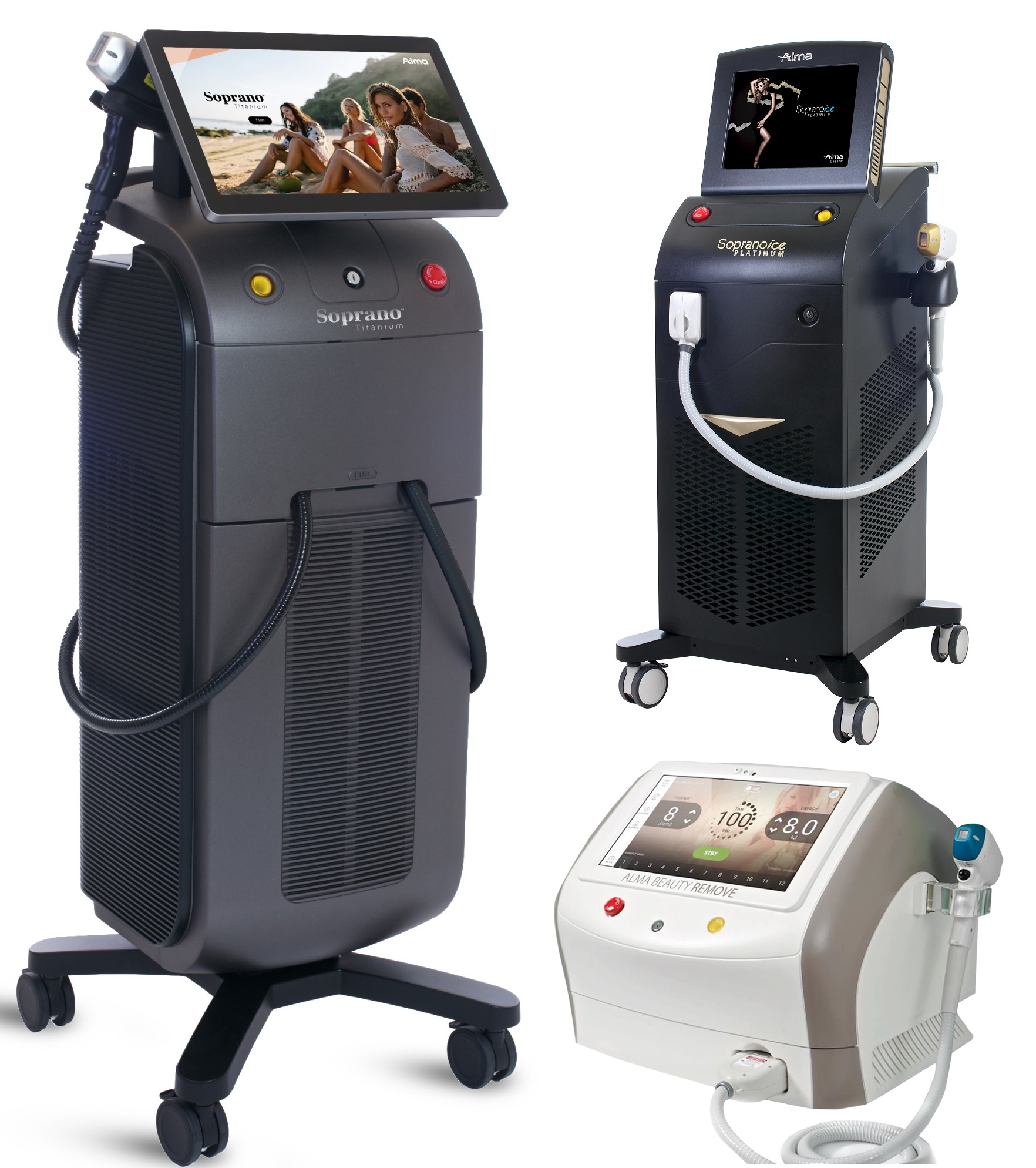
Some of the best 3D laser hair removal systems in the world are Soprano Titanium and Soprano ICE Platinum , as well as the popular Alma Beauty Remove (Soprano Baby). The super popular Soprano SHR™ technology, patented by Alma Lasers in 2006, has long become the standard for laser hair removal around the world. This is the only laser method approved by the FDA for use from the age of 14 and allows you to control the storage energy. The Alma Lasers company (Israel-Germany-USA) is one of the largest and most promising world leaders in the development of aesthetic equipment. Beware of fakes! Any manifestation of advertising of counterfeit equipment is criminally punishable. Take care of your clients and your reputation!
Cavitation
Cavitation is an effect of non-surgical liposuction that allows you to obtain a result comparable in effect to a surgical procedure. The essence of the method is the action of a combination of low-frequency ultrasound waves on the membranes of adipocytes, as a result of which a cavitation effect occurs in them. Under the influence of low frequency ultrasound, the pressure in the intercellular space decreases, causing an increase in the size of gas microbubbles in the adipocyte. Rising upward to the surface of the adipocyte membrane, they rupture and destroy it with the force of a shock wave. Through the destroyed membrane, the contents of the fat cell enter the intercellular space, and due to the difference in concentration gradients, they are absorbed into the lymphatic and venous vessels, and then excreted naturally from the body.
Thanks to the cavitation procedure, you can professionally reduce the volume of local fat deposits and shape your silhouette.
The cavitation procedure is used for:
• treatment of cellulite;
• reducing the volume of the fat layer;
• correction of defects after surgical liposuction.
Contraindications to the cavitation procedure:
- pregnancy and postpartum period;
- cardiovascular pathologies;
- thrombosis, thrombophlebitis;
- tinnitus, middle or inner ear dysfunction (eg, inner ear inflammation and all forms of vertigo syndrome);
- osteoporosis and all forms of fragility of bones;
- neoplasms;
- skin lesions;
- metal prostheses (at the procedure sites);
- electronic cardiac stimulator;
- any other pathology that may put the patient's health at risk.
Oxygen exposure
Oxygen mesotherapy is a relatively new technique in cosmetology, also known as “mesotherapy without needles.” First of all, it is worth understanding how appropriate it is to use the word “mesotherapy” in this case. After all, mesotherapy is an injection method for intradermal administration of substances that are not able to independently overcome the stratum corneum. Substances enter the deep layers of the skin through a puncture made by a needle and are delivered directly to target sites.
Unlike traditional mesotherapy drug administration, “oxygen mesotherapy” consists of a targeted effect on the skin with a high-speed stream of pure oxygen (“oxygen needle”).
The oxygen stream does not violate the integrity of the stratum corneum, which means that the problem of targeted delivery of substances is solved in a way that is fundamentally different from the injection method. In this regard, this method can be called mesotherapeutic very conditionally, but it is worth noting its safety and effectiveness.
When using oxygen mesotherapy, unlike the injection technique, there are no side effects such as pigmentation, pinpoint hemorrhages, infiltration at the puncture site, general allergic reactions and some other manifestations. The effect of oxygen mesotherapy is based on the fact that epidermal cells receive oxygen not from the blood, but directly from the air containing 16-20% oxygen. If you increase the oxygen concentration (up to 98%) and its pressure, the rate of oxygen exchange in the epidermal cells will also increase. This leads to a change in the characteristics of the cell membrane, as a result of which its permeability increases and the absorption of active substances of cosmetic preparations increases, which nourish and enrich the skin for a long time after the procedure. In addition, after saturation with oxygen, metabolism is normalized, regeneration processes are accelerated, and the healthy appearance of the skin is restored.
Oxygen therapy procedure:
- stimulates blood microcirculation and cell metabolism;
- improves complexion;
- restores damaged cells;
- strengthens and tones the skin;
- strengthens the skin's antibacterial protection;
- used in the prevention and treatment of acne;
- saturates intercellular lymph, connective tissues and the basal layer of skin with oxygen.
Oxygen inhalation with aromatherapy has a detoxifying effect on the body, protecting it from environmental pollution, smog, tobacco smoke, stress, and fatigue. This procedure also promotes relaxation, restoration of inner harmony, good health and good mood. In addition, oxygen has a complex beneficial effect on the body: strengthens the immune system, reduces blood pressure, normalizes sleep, relieves stress, and normalizes metabolism.
Contraindications to the oxygen therapy procedure:
- pregnancy;
- cardiovascular pathologies;
- neoplasms;
- skin lesions;
- any other pathology that may put the patient's health at risk.
Of course, the list of existing methods of hardware cosmetology can be continued and supplemented, and of course, thanks to the rapid development of the beauty industry, new methods based on revolutionary discoveries will certainly appear and will prove to be effective assistants in the correction of aesthetic imperfections.
This article is part of the special project HARDWARE MEDICINE
You can read all the articles on this topic:
SPECIAL PROJECT. HARDWARE MEDICINE
Literature:
KOSMETIK international journal, No. 2 (44), 2011, Irina Hieronymus – cosmetologist
KOSMETIK international journal, No. 3/2013, Tatyana Momot, functional diagnostics doctor, certified consultant on functional diagnostics of the skin Courage-Khazaka–electronic GmbH (Ukraine, Kiev)
Les Nouvelles Esthetiques Ukraine, No. 6 (70), 2011-2012, Lyudmila Efimova, dermatocosmetologist, expert of the Interregional Professional Cosmetology Association, methodologist of the SportMedImport Group of Companies, (St. Petersburg).
Read also
- Post-injection reactions: complications and side effects after mesotherapy
- From redness to anaphylaxis: diagnosis and emergency care for allergic reactions
- Results of "Christmas LION" 2025: when fairy tale meets science
- What does hyaluronic acid provide in skin care?
- In focus: a revolutionary solution for the treatment of all types of hyperpigmentation
- Hypoxia of aging: the role of microcirculation in the pathogenesis of age-related skin changes
- In focus: 4D strategy in skin care for hyperpigmentation
- Zero risk: general principles for preventing complications from chemical peels
- Glycation and skin aging
- 4rest (Forest), company
- Rosacea
- Couperosis
- Angioneurosis
- Peloid therapy
- Waxes for depilation
- Fordyce granules
- Bogomolets Olga
- Microneedle therapy