Acne and its manifestations: medical treatment
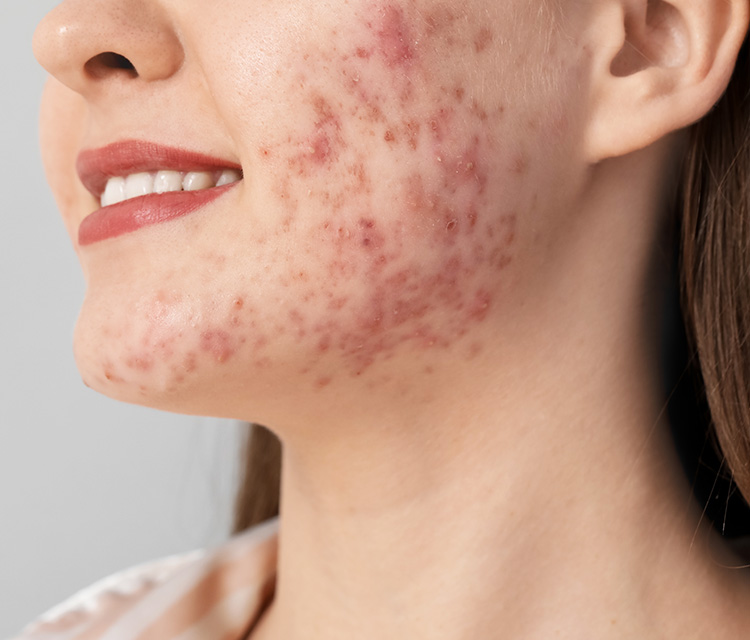
The topic of acne has been and will continue to be given a lot of attention, which is due to the relevance of the problem, which does not decrease over time. Acne does not spare either teenagers, young women, or mature women during menopause.
Acne vulgaris is a polymorphic multifactorial disease of the sebaceous glands, the pathogenesis of which is based on the following processes:
- hypertrophy of the sebaceous glands;
- hyperproduction of sebaceous gland secretion;
- follicular hyperkeratosis;
- increased reproduction of Propionbacterium acne in anaerobic conditions (blockage of the excretory duct of the sebaceous gland) with subsequent development of inflammation.
It is known that the earliest changes in acne are the disruption of keratinization of the follicular canal epithelium and its obturation with horny scales. According to recent studies, hyperkeratinization of the follicle is a key factor in the development of acne. Normally, in the lumen of the follicular canal there is a thin stratum corneum, consisting of corneocytes, which are weakly interconnected, easily exfoliate and come to the surface of the skin together with the secretion of the sebaceous glands. With comedone formation, this process is slowed down.
Full version of the access article in Ukrainian
Read also
- In focus: combination gel for the treatment of mild to moderate acne
- A systemic view of acne: the role of lipid profile in sebaceous gland activation
- Peeling in children and adolescents: all the pros and cons
- Topical and systemic acne therapy: use of antibacterial drugs
- Antibiotics: features of use in patients with acne
- Possibilities in acne therapy: a variety of treatment methods
- Acne and scar treatment: choosing a peel
- Post-acne
- Acne