Permanent makeup: the main mistakes of a novice master
How a permanent master can avoid mistakes at the beginning of practice

There are many subtleties in the work of a PM specialist, which a novice master may not have heard of, so we decided to turn to the topic of mistakes in permanent makeup, because everyone makes mistakes.
Anna Zhukovskaya , permanent makeup master teacher, certified trainer of TM Mei-cha, founder of the Beauty Permanent permanent makeup school, author of individual permanent makeup training programs, participant and judge of open permanent makeup championships in Ukraine and abroad, winner of the GRAND PRIX and 1st place in the Atniconference-2020 permanent makeup championship, more than 10 years of experience
Starting something new is not always easy, every business has its own nuances that you should be aware of. Permanent makeup is no exception. This is a difficult profession and painstaking work. There are many subtleties in our business that a novice master may not have heard of, which is why I decided to write this article.
You need to start by choosing a school for training. The whole foundation of your future is laid here, so you need to choose your teacher very carefully. This should be a master with experience, whose approach and techniques appeal to you the most. Lack of professionalism and inexperience can lead to disastrous consequences. Remember that you are working with a face, and here you definitely need to have good knowledge and practice, and only a professional can give you this.
Be sure to pay attention to what equipment the master works on in order to understand whether you can purchase it. It makes no sense to learn on equipment that you do not plan to buy and work on it in the future.
If you seriously approached the issue of choosing a school, as mentioned earlier, and completed the basic course, you can be calm - you already have the foundation. But mistakes cannot be avoided, we are all human, a lot comes only with practice. There are mistakes that should be emphasized, they are made by almost every novice master up to one year of work. Let's dwell on them in more detail.
Workplace and equipment of the master
The first thing that directly affects the result is the comfort of the workplace. It is unlikely that the expected effect will turn out if your arm or back hurts during the procedure. Before starting work, focus on the correct location of the workplace. If you are left-handed, then you should sit to the left of the couch, if you are right-handed - to the right. The position of the body on the chair relative to the client’s head should be such that the movements of your hand are directed to the “navel” zone, while the hand does not twist in different directions, the back is even, and the stomach rests on the couch. The height of the chair must also be adjusted.
Secondly, set up the equipment so that at the slightest touch to the skin, the device leaves a mark (this can be checked on the glove, if it is sterile, of course, and you are sure that it will not be pierced). The needle in the device should be firmly attached to the tip, and not hang out in the middle (this applies to both the cartridge system and the needle-nozzle system). Adjust the needle stick-out for good ink flow. It can be standard, or it can be manually adjusted.
Thirdly, pay attention to whether you are holding the device correctly. It is important to know that if you hold the device incorrectly, your hands begin to hurt, this is fraught with many diseases, just like poor posture. The hand should be relaxed, only the fingers are involved in the work, and not the hand in the hand, and even more so in the elbow.
Mistakes when communicating with a client
Starting to work directly with the client, novice masters also make mistakes. To correctly understand the desire of the client and offer possible solutions to the problem - this is what every specialist should be able to do.
It must be understood that a person who does not understand the intricacies of the profession can see a photo on Instagram and decide that he wants the same. But your task as a professional is to explain to the client that everything is individual, because we are all different, and what suits one may be a mistake for another. Speak all the nuances and stages of the procedure, discuss the color and shape to the smallest detail, and always sign the “Voluntary Consent to the Procedure”. Before making a client appointment, you should discuss contraindications and provide care advice both before and after the procedure.
The subtleties of the procedure
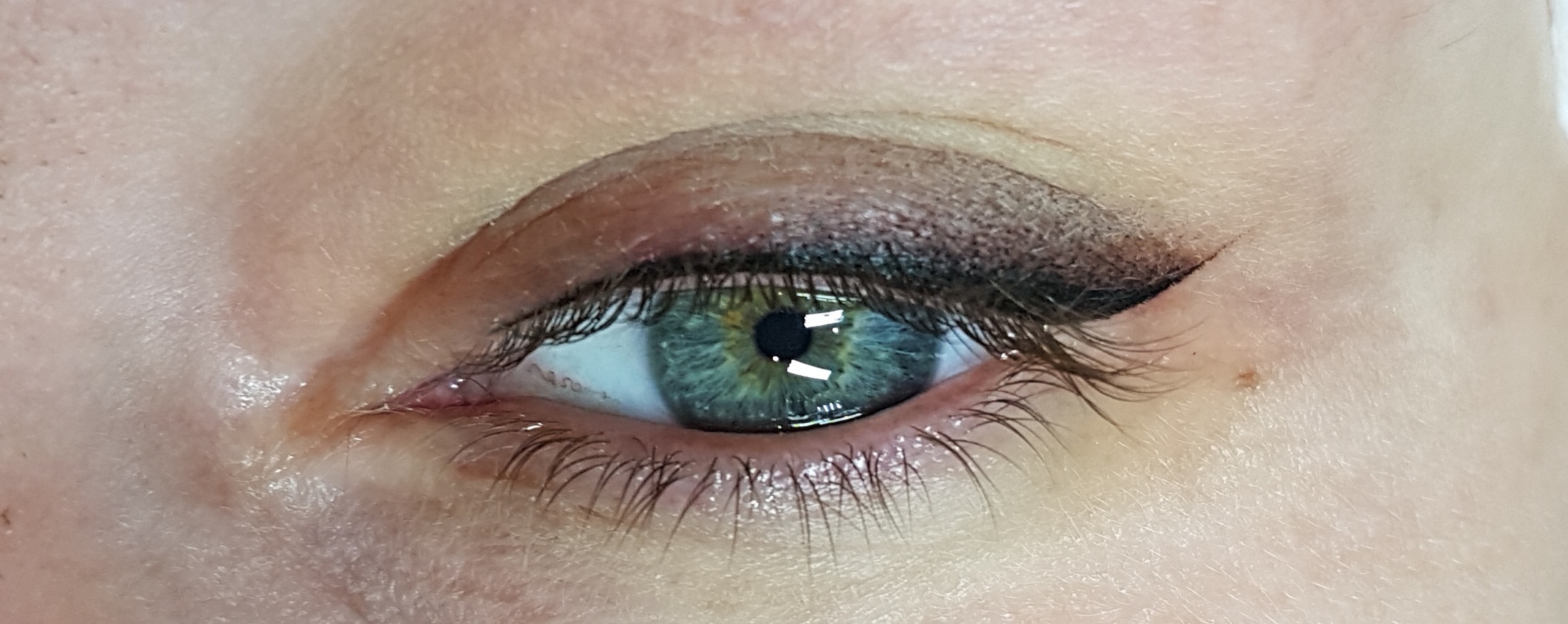
Another important nuance, which often leads to an unsatisfactory result, is “hack-work” in working with a sketch. It is better to spend more time, but do it well. Drawing the future creation is a huge part of the job. Here you need to turn on your creative vision, use the knowledge gained in training, artistic abilities and a sense of proportion. What to do if these qualities are not there or they are not yet developed enough? Use improvised means: calipers, threads with paint, rulers, etc. Draw brightly: the brighter the color, the more the symmetry is visible. Take pictures of the sketch - this will help you see it "from the side."
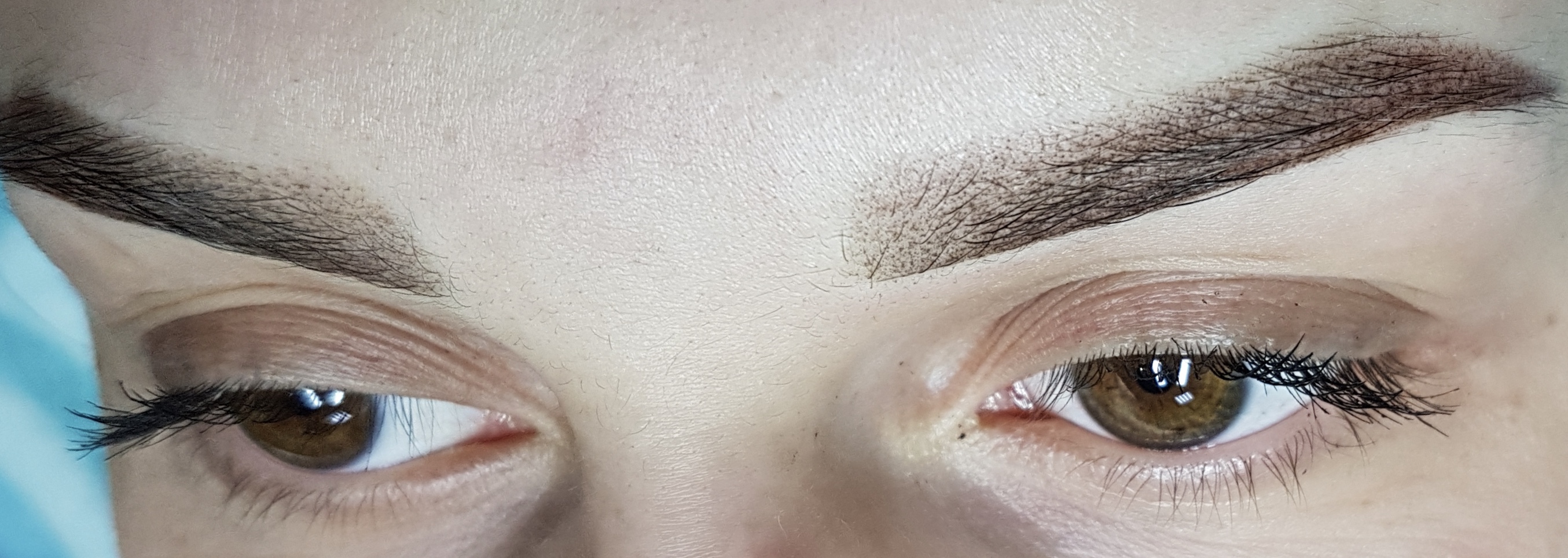
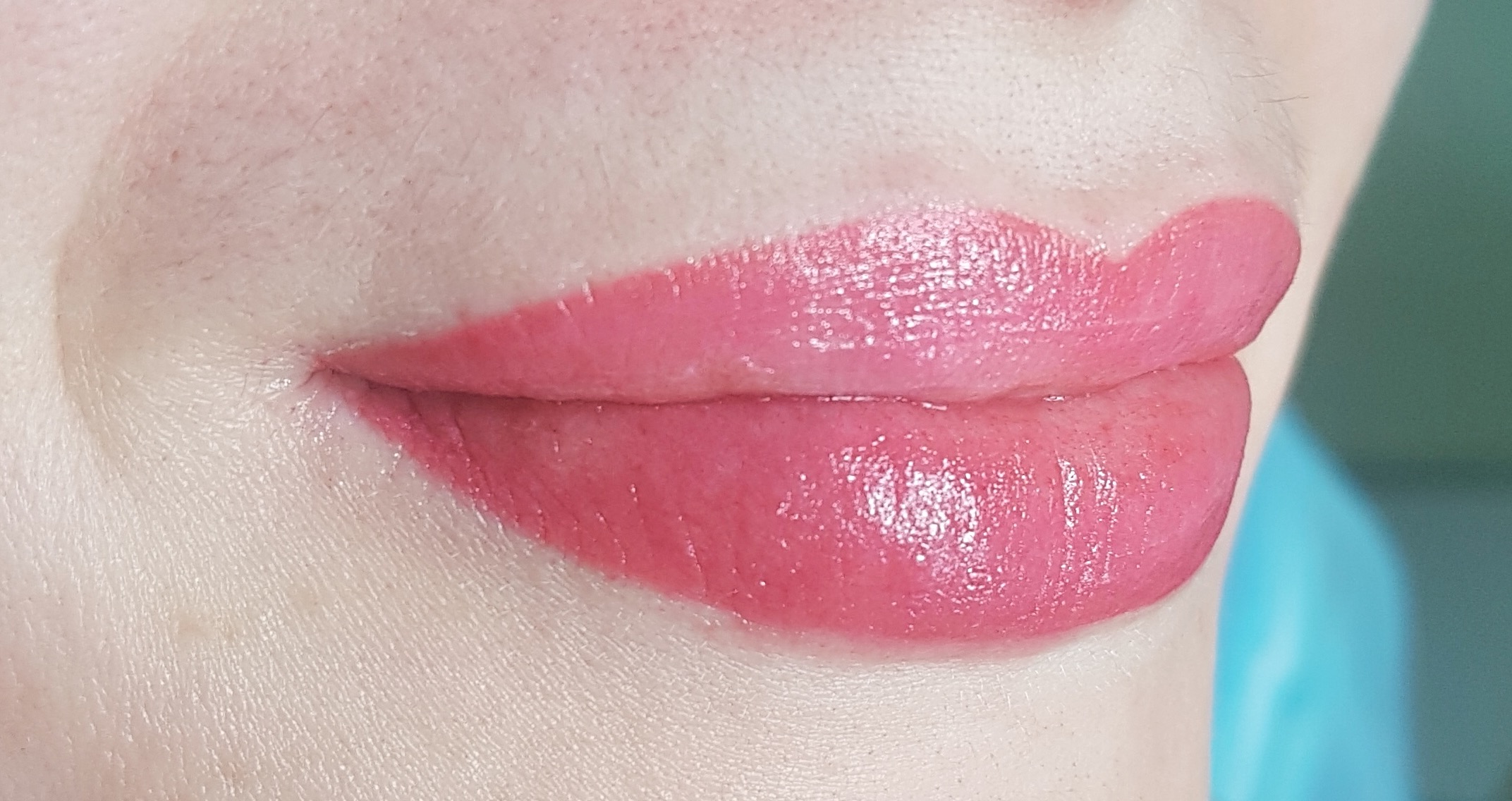

Photos provided by the author
In addition, you need to choose a quality pigment that will match the color type of the client. Permanent make-up is very specific, and errors in coloring lead to frequent corrections and often removal. Here you need to be especially careful and not make mistakes. Coloring is a key aspect for the final result. If coloristics was not studied at the basic training, it is necessary to undergo training separately. And before that, use only the pigments and their mixing formulas that you were given in training.
The next mistake is the depth of pigment penetration under the skin. During training, you must learn to feel the depth of penetration of the needle and have a sense of proportion. After all, the desire to “drive” the pigment as deep as possible and get saturation in the absence of a sense of proportion can lead to severe trauma, and, conversely, if the pigment is applied too superficially, then nothing will remain at the tattoo site after the skin has healed. For the correct laying of the pigment, you need to work out your “perfect touch” on the latex and learn to listen to the “skin vibration” at the moment of contact with the needle. Many hours of training will help you a lot in this.
It is especially important to have a good base, as mentioned earlier, because each master has his own specific technique for introducing pigment. And this is important, because a good technique produces minimal trauma and a beautiful result with a natural effect.
I would also like to mention the desire to save money. Permanent make-up is an expensive procedure, for which it is impossible to save on materials. You are working with a face, and any inaccurate movements, saving on materials lead to bad consequences. Poor-quality material can cause many problems, ranging from allergies and rashes to burns and infections from harmful chemical elements entering the skin. Starting directly to practice, it is better to buy those materials that you have already met during training, and at the beginning of a professional path, you should not experiment with something unknown.
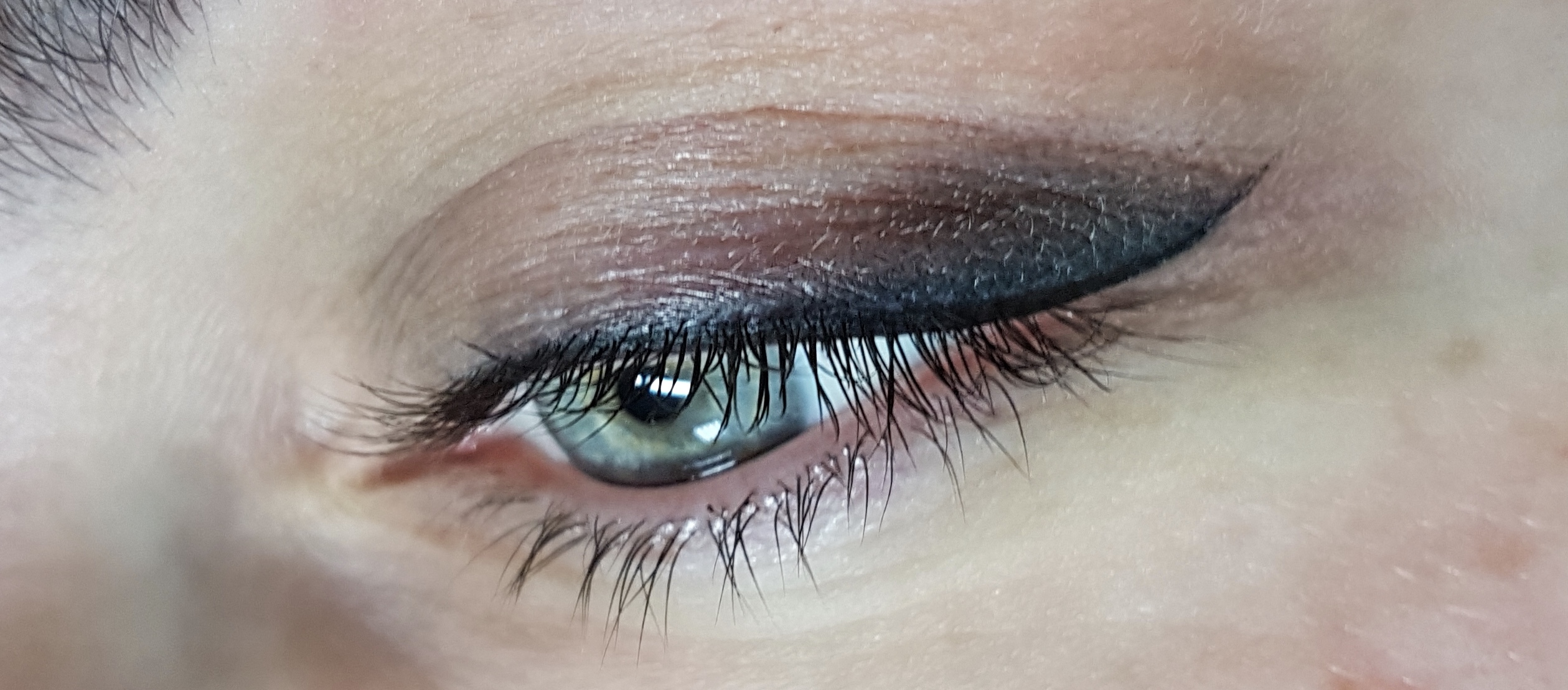
Photos provided by the author
Stopping development is the biggest mistake of the master
The world does not stand still, new technologies, techniques and materials appear daily, and our profession is no exception. Customers see this and definitely want to get a novelty, since everything is popularized on the Internet. Continuous development is a feature of professional excellence. Each specialist must expand the range of services that he can offer clients in order not to remain outsiders. Many new materials and technologies will make your work easier and more effective, but do not forget that sometimes the old and tested is better than the new ones that are not yet known. Remember that any new technique, apparatus or pigments must first be tested on artificial skin, which will greatly reduce the risk.
A lot comes only with practice, but this does not mean that theory does not matter. Seminars, master classes and refresher courses raise your status in the beauty industry.
Summing up, I would like to wish that every master approaches his work as creativity, because this is how it is. Just wanting to make money in our profession is not enough. People see your dedication and approach to the profession and, believe me, they really appreciate it. Love your job and don't make mistakes.