Permanent makeup: work on skin of different colors
Skin color - is it important for permanent makeup?
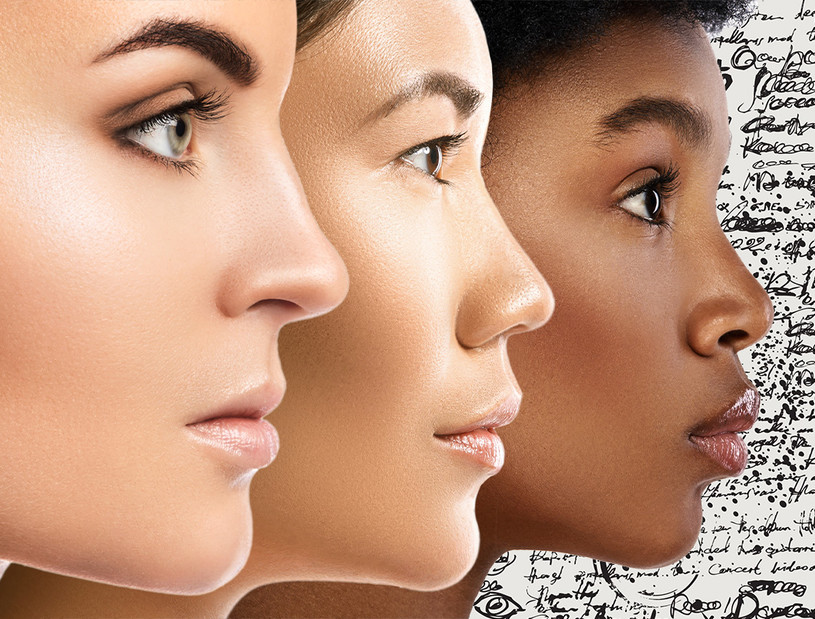
About the current topic of working with skin depending on race and why it is important for a PM master to understand the characteristics of skin of different colors and the features of working with it
Lyubov Malysh, dermatocosmetologist, specialist in hardware and injection techniques for face and body correction, leading specialist in exclusive hardware techniques at the BMDC clinic (France), member of the Association of Cosmetologists and Aromologists of Ukraine
According to the current classification, the division into races is carried out according to the so-called anthropogeographic principle and skin color. There are three main races: Caucasian (it includes people with fair skin), Negroid (its representatives have black skin) and Mongoloid (the so-called yellow race). Each group is divided into subgroups that differ in certain characteristics, but are based on anthropological and geographical influences.
One way to divide people into races is to determine the color of the skin, but it is not possible to draw a clear line between these groups. However, most black people are different from most white people, and you could easily tell one from the other.
The color of healthy human skin depends on the presence of three types of coloring substances, or pigments. The most important of these pigments is melanin , a dark brown substance. The skin of all healthy people contains melanin. The color and shade of the skin directly depend on the amount of melanin, which is genetically incorporated and produced when exposed to sunlight.
Africans have more melanin in their skin than whites. This is the key to determining skin color. The number of melanocytes is genetically determined and remains for life. This is an adaptation to the climatic conditions of the environment, necessary for survival.
The second of the three pigments is carotene. This is a yellow substance that is present in carrots (from the English carrot ⎼ "carrot"), in the yolk of an egg. Like melanin, carotene is present in the skin of all people. Previously, there was a version that among people with a small amount of melanin in the skin, some have more carotene, others less. This allegedly gives the skin a yellowish tint, which is more characteristic of the inhabitants of East Asia. Let's find out!
Skin pigments: not so simple
There are three main types of melanin in the human body: eumelanins, pheomelanins, and neuromelanins. Neuromelanins are a dark pigment, the exact structure and functions of which have not yet been elucidated. According to modern concepts, this type of melanin in the brain, apparently, plays the role of antioxidant protection. Pheomelanins have a reddish color, they give a characteristic pink or red color to the lips, nipples, genitals; hair containing pheomelanin will have a reddish color. Eumelanins are the most common, they can be brown or black in color, their quantity and color, which is laid down by genes, determines skin tone. Therefore, it is not entirely correct to assert that it is carotene that colors the skin of a Mongoloid in a yellowish color, moreover, the skin of a representative of this race does not always have such a shade.
The third pigment is hemoglobin, which colors blood red. Naturally, it is present in all people. However, hemoglobin is found in the blood vessels under the skin and thus is hardly visible. Its presence is completely blocked by the proper amount of both melanin and carotene in the skin. Hemoglobin can only be seen in the skin of white people, especially those with fair complexions. And it is hemoglobin that makes the cheeks pink and allows you to blush.
Based on these differences in coloration, humanity is divided into:
- afrorace ⎼ determined by the high content of melanin;
- yellow race ⎼ with the content of melanin of a different color;
- white race ⎼ low in melanin.
Underwater rocks
Such a division would seem quite satisfactory were it not for some difficulties.
First, the differences described are not so clear cut. All kinds of intermediate skin colors are available. For example, Southeast Asians and Native Americans, Indians, are darker than Chinese and Japanese are representatives of the yellow race. On the other hand, they don't look like African Americans. Sometimes the inhabitants of Southeast Asia, as well as the inhabitants of many of the Pacific islands, are referred to as the Melanesian race, while the American Indians are referred to as the red race. (This description is perhaps incorrect, since the Indian has a brownish tint, but not red.) In other respects, these peoples are known to be more of a yellow race, so perhaps a better solution would be to classify them as a yellow Melanesian. a race that includes all these groups.
Another source of doubt is that groups of people can have the same skin color and yet differ in many other ways. There are the dark-skinned peoples of Africa, called African Americans, and there are the dark-skinned Aborigines of Australia. There is a third group of dark-skinned people called Dravidians, they were among the earliest inhabitants of India and now live compactly in the southern regions of this country. Despite their dark skin color, in many ways they are different from both Africans and Australian Aborigines.
And not all Africans are as dark-skinned as we might imagine. Americans are used to seeing black Africans because the ancestors of most African Americans were brought to America from West Africa. And this is the region where the most dark-skinned peoples live. There are Africans whose skin is much lighter. Some East African tribes, for example, are people with slightly brown, almost yellowish bodies.
Skin color does not remain completely unchanged. Although the skin cannot become lighter, at the same time it often darkens, becoming tanned by natural sunlight. Ultraviolet rays can be quite harmful to the skin if they penetrate the outer layer of the skin. Melanin protects the skin by blocking UV rays. Many whites, without having enough melanin in their skin to protect themselves, can get extra melanin over time if they work or spend time in the sun. Very fair-skinned people, no matter how hard they try, often cannot produce enough melanin. They "burn" rather than get a tan.
The darkness of a tanned person's skin will slowly disappear if he is no longer exposed to the sun. However, many tanned whites actually have more melanin in their skin than many black Africans.
Bet ⎼ on experience
When applying a tattoo, the artist must take into account the characteristics of the skin, such as shade, moisture, oiliness, sensitivity, etc. There is an opinion that the skin of an Asian or European is more supple and thin than that of the representatives of the African race. How true is this? I must say that no one has seriously dealt with this issue, therefore there are no definite statistics on the features of the introduction of a decorative pigment into the dermis of different colors.
Each master argues based on his work experience, which does not always cover a large circle of clients, in order to have any statistics. In addition, a representative of any race can have oily, dense skin with wide pores, as well as dry, thin or weathered skin. It depends on a number of factors, such as hereditary predisposition, puberty, aging, diseases of the internal organs, hormonal levels, etc.
The myth that dark skin is less sensitive is due to the fact that on dark skin, the manifestations of redness are less visible visually. Based on all this, we can conclude that there is a need for an individual approach to each client, in addition, there are some diseases that occur predominantly in black people. In addition, some features characteristic of skin with racial pigmentation can in some cases be mistaken for a manifestation of the disease.
The material was first published in Permanent