Fitzpatrick scale and pigment selection
How a permanent makeup artist can avoid mistakes in coloring
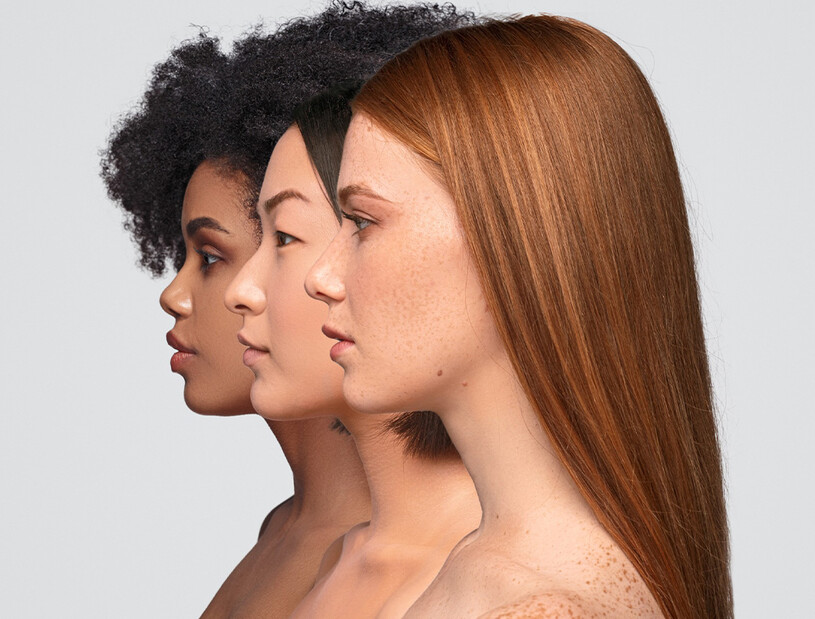
There are many classifications of skin types, but the most common is the Fitzpatrick classification. How to work with different skin types and how is the Fitzpatrick method used by permanent makeup masters? About this - in the article
There are many classifications of skin types, but the most common is the Fitzpatrick classification. How to work with different skin types and how is the Fitzpatrick method used by permanent makeup masters? About this - in the article
Fitzpatrick scale: what is it?
The classification according to the method of Thomas B. Fitzpatrick from Harvard Medical School, developed by him back in the 70s of the twentieth century, is still used today. It is based on how the skin reacts to exposure to sunlight. Fitzpatrick studied the effect of ultraviolet rays on human melanosomes and melanocytes and came to the conclusion that darker skin (which contains more melanosomes than light skin) reacts more strongly to ultraviolet light and perceives sunburn better. Thus, the Fitzpatrick scale is a classification of skin by phototype.
According to the Fitzpatrick classification, there are 6 types of skin.
The first type is Celtic. It is characterized by delicate, transparent skin of a milky or creamy hue, often covered with freckles, very blond or red hair, green or light blue eyes.
The second type is Nordic, also known as Aryan, Scandinavian or Eastern European. The skin of this type is light, although a little darker than that of the Celtic type, with no or very few freckles. Light eyes - gray, blue, green, hair is also closer to light, usually brown shades (light blond, blond, chestnut, etc.).
The third type is Central European or mixed. The most common type in our country. In people of this type, the eyes can be either gray or brown, the hair is various shades of brown, but darker than that of the Nordic type, usually dark blond or chestnut. Skin without freckles, slightly dark, the color can reach very light brown.
The fourth type is Mediterranean or South European. He is characterized by bright brown eyes, dark hair, dark olive skin, completely devoid of freckles.
The fifth type is Indonesian or Middle Eastern. This type is distinguished by very dark skin, the color of which can reach dark brown, black hair, dark eyes.
The sixth type is African. Such people have very dark skin, eyes and black hair.
Fitzpatrick scale and permanent makeup
Using the Fitzpatrick Scale, a permanent makeup master can determine how the pigment will behave in the future. For example, on skin with a large amount of melanin, the pigment darkens, i.e., its hyperpigmentation occurs. How to check the tendency to hyperpigmentation? How not to encounter an ashy hue? First, the master determines the type of skin, and then selects the pigments.
Melanin is a dye that causes skin pigmentation. When the skin is damaged due to sun exposure, acne, or during a permanent make-up procedure, melanin is released and certain skin types darken. Thus, the color of the skin can change as a result of the introduction of dye into it during the procedure of permanent makeup due to the release of melanin. When a PM master works with skin with a high content of melanin, he needs to understand that the color of the pigment will change as much as if 20-30% black was added to it. Skin types 4, 5 and 6 on the Fitzpatrick scale contain a lot of melanin, so the pigment darkens. The skin of Africans, Hispanics and Asians is prone to hyperpigmentation. During the consultation, the client must be informed about this. And when choosing a pigment for skin types 4, 5 and 6, in order to get the desired color, you should select a dye two or three shades lighter. In this case, the desired result will be obtained.
Let's look at an example. A client of Spanish or Latin American type wants to get permanent lip makeup, adding brightness to her natural color. If she is prone to hyperpigmentation (skin type 4, 5 and 6), you should always remember that no matter what color of pigment you take, its shade will change due to mixing with 20-30% melanin. The result is an unwanted brown-red color. For this reason, it is necessary to do a test on the lips, since in this area the probability of discoloration is much greater. In addition, it is very difficult to predict the result if the skin is prone to hyperpigmentation. Therefore, you need to be especially careful when choosing a color when you work with dark skin.
A good way to test for hyperpigmentation tendencies is to look at a bare face. In this case, the indicator will be the presence of dark spots on the face. Black pigment is not recommended for use on such skin. It contains a lot of blue undertones, due to which any pigment injected into the skin acquires an ashen tint. In this case, the black tone changes to bluish-gray. It is recommended to use warm pigments to neutralize the blue undertones of the skin.
You also need to remember that red neutralizes green and vice versa. Therefore, if the complexion is olive, green will absorb red, and pigments from a warm palette should be used. If the complexion is pink, pigments from a cold palette will do.
Read also