*The article was translated into English using automatic translation. The editors are working on its improvement.
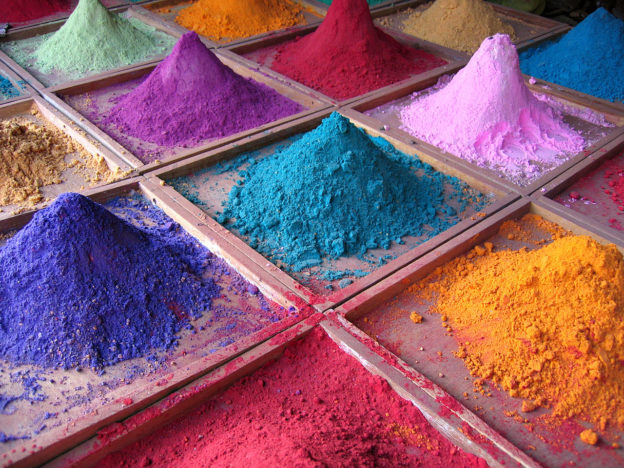
Pigment (Latin pigmentum - paint) is a component of filled composite materials that gives the materials opacity, color, anti-corrosion and other properties. Permanent makeup pigments are dyes designed to be introduced into the upper layers of the human dermis to correct congenital skin defects or provide additional beauty.
A pigment for permanent makeup is a durable substance, colored or black and white. It has persistent physical characteristics and does not dissolve in the media that surround it. The particle size (molecules) of the pigment is within 4–6 microns, this ensures the most even color of permanent makeup , stable fixation of the pigment in the skin and does not allow the pigment to migrate to nearby tissues. The quality and intensity of the coating provided by the pigment directly depend on the quality of the original base material. That is, the purer and better the dry pigment, the better the finished paint. The structure of the dry part should be uniform, without lumps when drying. The heterogeneity of the powder can cause difficulties in the work of a specialist.
A common mistake is to use the term “pigment” as a synonym for dye. Although the terms "dye" and "pigment" are often used interchangeably, the concepts are clearly distinguished - dyes are soluble in the dyeing medium (solvent), while pigments are insoluble. There are natural mineral pigments (inorganic components of paints) and biological pigments ( biochromes - natural in living organisms).
All pigments (dry matter) are divided into organic and inorganic .
All pigments introduced into the skin, regardless of the manufacturer, are divided into two types: pigments for permanent makeup and pigments for tattoos .
The pigment consists of a dry dye (the pigment itself) and a liquid medium (the conductor of the pigment into the skin). The base is the liquid part of the pigment. Several components of this medium are basic and are included in pigments from all manufacturers: distilled water, isopropyl alcohol and glycerin. It may contain various additives that improve the quality of the final product.
Depending on the percentage of basic elements, all paints can be divided into water-alcohol, alcohol and glycerin.