Emotional burnout: how a doctor can recognize warning signs
Many people are familiar with burnout syndrome firsthand. In particular, this problem can affect those who work with a large number of people. Let's look at the main causes of burnout syndrome.

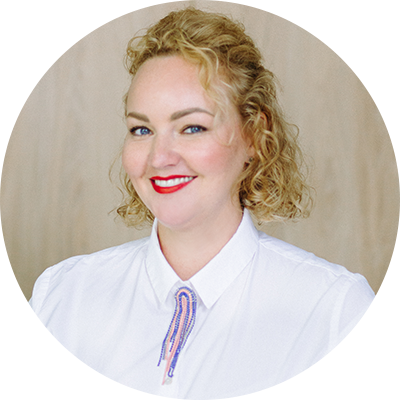
Karina Shinder , dermatologist, cosmetologist, specialist in injection techniques
Emotions are a mental process that reflects a person’s subjective evaluative attitude towards various situations and objects.
Functions of emotions
Emotions play an important role in our lives, so their influence is usually divided into four main actions.
1. Motivational and regulatory. Such emotions motivate a person to action, guide and determine his further behavior, and sometimes block thinking.
2. Communicative. It is thanks to emotions that we understand what mental and physical state a person is in, and depending on this, we choose a further line of behavior to communicate with him.
3. Signal. Expressive gestures and facial expressions during emotions signal to others about our desires and needs.
4. The protective effect of emotions allows an instant reaction in some cases to save a person in dangerous situations.
Burnout is a state of physical and mental exhaustion that occurs in response to emotional stress when working with people. It is especially susceptible to people whose work activity is associated with regular communication with other people, emotional empathy, great responsibility, workers with a “person-to-person” profession, since they are the ones who are exposed to constant interaction and communication with people.
Burnout is also understood as a professional crisis associated not only with interpersonal relationships, but also with work in general.
Burnout syndrome (EBS) was first described in 1974 by American psychologist Freudenberger to describe the demoralization, frustration and extreme fatigue that he observed among mental health workers.
The main symptoms of SEV are:
Fatigue, exhaustion, exhaustion after active professional activity.
Psychosomatic problems (fluctuations in blood pressure, headaches, diseases of the digestive and cardiovascular systems, neurological disorders, insomnia).
The emergence of a negative attitude towards patients (instead of previously existing positive relationships).
Negative attitude towards the activity being performed.
Aggressive tendencies (anger and irritability towards colleagues and patients).
Functional, negative attitude towards oneself.
Anxiety, pessimistic mood, depression, feeling of the meaninglessness of current events, guilt.
SEV currently has the status of a diagnosis in the ICD-1O section Z73 - “Problems associated with difficulties in managing one’s life.” Mental burnout is understood as a professional crisis associated with work in general, and not just with interpersonal relationships in the process.
Burnout can be equated to distress (anxiety, depression, hostility, anger) in its extreme manifestation and to the third stage of the general adaptation syndrome - the stage of exhaustion. Burnout is not just a result of stress, but a consequence of unmanaged stress.
Despite the fact that cosmetology is at first glance the least stressful specialty, cosmetologists burn out no less than their colleagues.
The main factors of burnout among my colleagues in the beauty industry
1. Absence as such of the specialty “cosmetologist”. That is, it is believed that a cosmetologist should be a doctor, but there is absolutely no legal justification for calling himself that. Hence the lack of self-confidence, insecurity from the law, and the lack of clear algorithms for action in conflict or stressful situations.
2. Disrespect for this profession from colleagues in other specialties. Non-perception of a cosmetologist as a doctor by colleagues working with seriously ill patients.
3. Not being perceived as a doctor by patients (the nurse/manicurist/just a good smart girl in the next salon does the same thing as you, but much cheaper).
4. Fear of making mistakes. This is inherent in doctors of absolutely all specialties, but in cosmetology there are no clearly defined protocols, our patients are not always really sick people in need of treatment, sometimes they need help, but this is not a disease. Everything we can do to help our patients cannot be objectively assessed, measured and verified.
Often the assessment of our work can be “like” or “dislike”.
-What exactly don’t you like?
-I don’t know, I just don’t like it, that’s all.
This is also an additional stress factor. It may not be very stressful, but it undermines us day after day.
5. Fear of not recognizing an inadequate, mentally unhealthy patient in time and getting long-term problems in the future (again, there are no clear tests for mental and psychological adequacy, legal insecurity still does not allow one to relax and work calmly).
6. Fear of “losing face” in front of colleagues. Endless broadcast of “successful success” on social networks, the inability to admit fatigue, the inability to allow yourself to make mistakes, to be weak, to not know something.
7. Fear of not recognizing scammers (a thriving type of fraud in cosmetology is to perform a procedure, say that you are dissatisfied, and refuse to pay).
Read more in the next article.