Bioelectrical therapy of the dermis: features of microcurrent massage
What dermatological and cosmetic problems does microcurrent therapy solve?
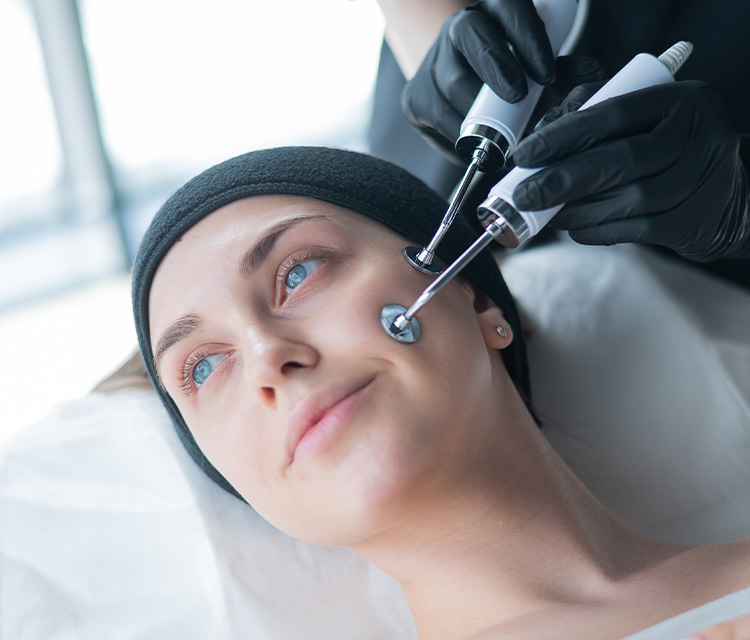
In the new era of cosmetology, everyone is concerned about neocollagenogenesis. Moreover, the division occurred at a certain clear line: some assure that these methods are able to replenish young collagen in the skin, while others persistently remind that you cannot stimulate synthetic processes indefinitely - you will have to pay for everything.
Time-tested methods of therapeutic influence sometimes turn out to be indispensable assistants in the hands of a cosmetologist. One of such methods is microcurrent therapy (MTT).
Relevance yesterday and today
We are accustomed to the physiotherapeutic definition: microcurrent therapy is one of the electrotherapeutic methods of influence on the human body, which uses a weak pulsed electric current in the range from 10 to 600 μA with a frequency of 0.1–300 Hz. We tell our patients that microcurrent therapy uses subthreshold currents. And it is this definition that is the most important in understanding the method.
Professor-psychiatrist Rudolf Arndt in 1883, conducting experiments on the effect of galvanic current on muscles, formulated a law that later formed the basis of microcurrent therapy. According to this law, weak stimuli awaken the activity of living elements, medium ones enhance it, strong ones inhibit it, and very strong ones paralyze it.
In the 50s of the 20th century, this law became particularly relevant. Neurophysiology was actively developing, and scientists focused on such concepts as the electric potential of a cell, action potential, and resting potential. One of the important stages in the development of microcurrent theory was the work of Robert Becker and Boehm Nordsten (USA, 1958), who proved that during any pathological process (trauma, inflammation, changes in physicochemical parameters during chronological and photoaging, etc.), the electric potential of cell membranes changes.
Full version of the access article in Ukrainian